 In this area
Downtown Crossing & Financial District
Boston Marriott Copley Place
8.7· 1,948 reviews
approx. from£857 / nightSee prices
The Boston issue
Boston’s most transactional square mile is also one of its most layered: a pedestrian retail spine, a Freedom Trail corridor and, increasingly, a place to linger after office hours.
By Priya ChandrasekarNeighbourhood by neighbourhood, on foot
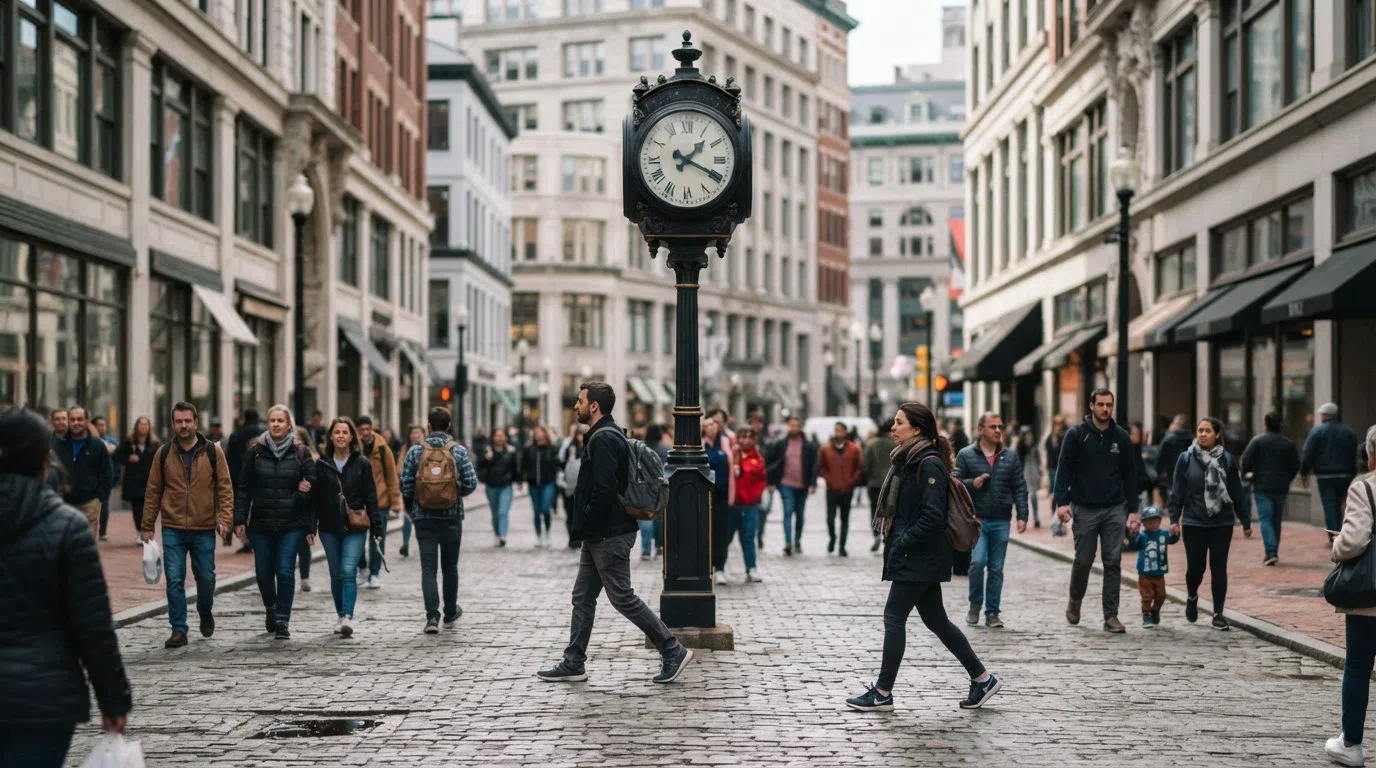
The first thing you notice at Washington, Winter and Summer is the absence of cars. People drift down the middle of the street as if the city has briefly agreed to let them have it back: office workers with coffee, buskers setting up, tourists angling for the Old State House, shoppers carrying Primark bags, all of it moving at the speed of a lunch break. This is Downtown Crossing, Boston’s retail spine, and just east of it the Financial District rises in glass and stone, a square mile that has always been about exchange — goods, money, trains, news, power — and only recently about staying for a second round.
Two stories run through these blocks and refuse to separate: commerce and history. Downtown Crossing got its name from the late-19th-century duel between Jordan Marsh and Filene’s, the department stores that faced each other across the intersection and turned the area into Boston’s shopping centre. The old names have mostly gone, but the retail instinct remains stubborn. Macy’s now occupies the old Filene’s building, and the place still behaves like a magnet, pulling people toward the pedestrian mall around Washington, Winter and Summer Streets.
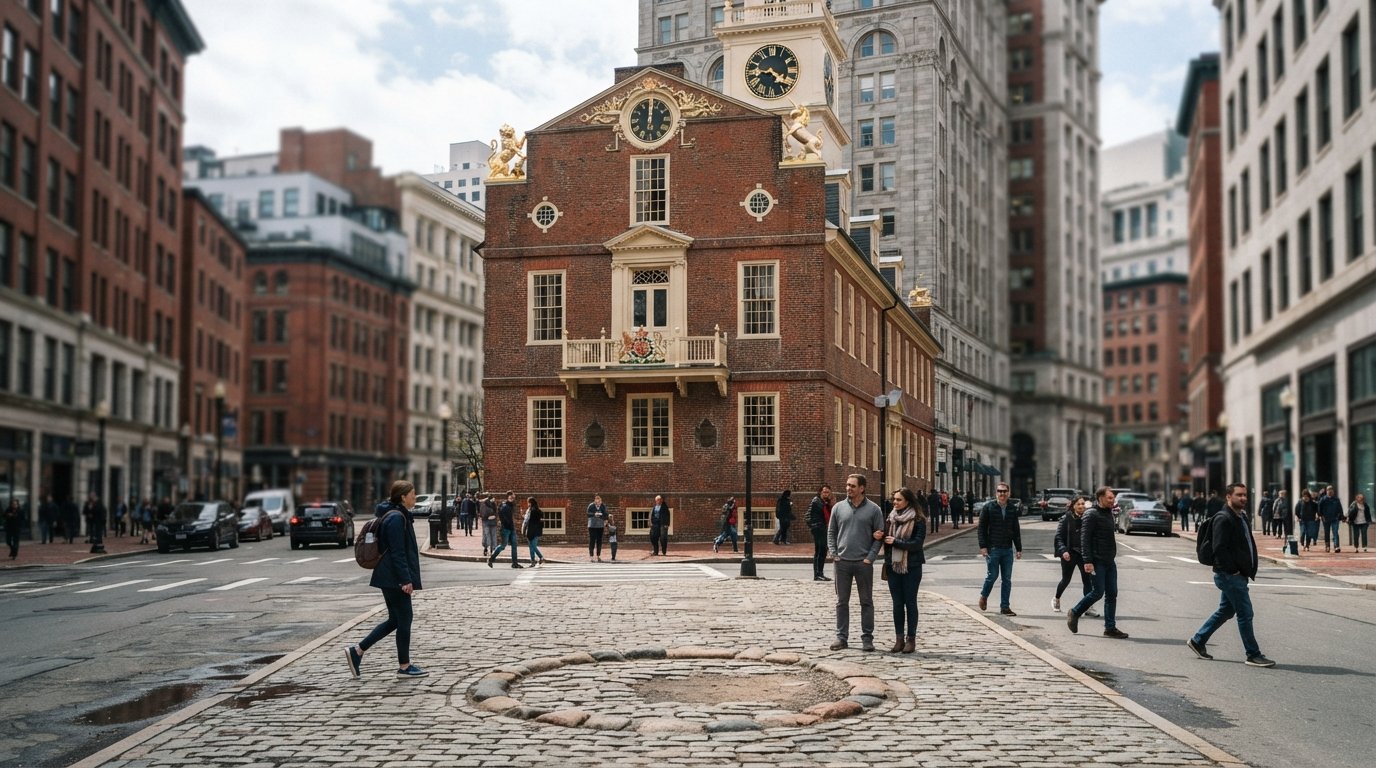
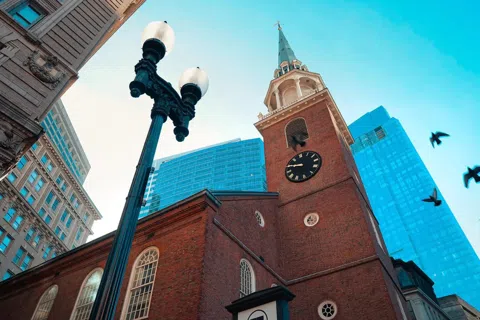
The other story is older and stranger. A plaque on Macy’s marks the site of the first mint in the British colonies, run by John Hull in 1652, and the Freedom Trail threads through the whole district as if history were simply another commuter route. That line leads you to the Old State House, built in 1713, marooned on a traffic island at Washington and State, with the Boston Massacre marker set in the cobbles below its balcony. A couple of blocks away is the Old South Meeting House, where 5,000 colonists gathered before the Boston Tea Party. The result is a neighbourhood where a Revolutionary-era alley can open onto a 1970s office plaza without warning, and neither feels out of place.
The Financial District, for its part, is the eastward cluster of towers around Post Office Square, International Place and the Custom House Tower, where banks and law firms keep their hours and the sidewalks fill and empty in sharp pulses. By day, that gives the area a clipped, transactional energy. At lunch, the suits pour out; at 5pm, they pour back in the other direction. Red Line trains rumble under Downtown Crossing station. Tour groups bunch around the Old State House. The whole district feels like a place people pass through on purpose.
And yet the texture is not purely corporate. The cobbled lanes — Bosworth, Winter Place — cut through the grid, and the old and the newer downtown keep colliding in useful ways. That friction is part of the appeal. It is not polished like Back Bay or Beacon Hill. It is busy, a little rough-edged at the fringes, and very central to almost everything.
Live prices from our booking partners.
Free cancellation on many rooms. We may earn a commission when you book.
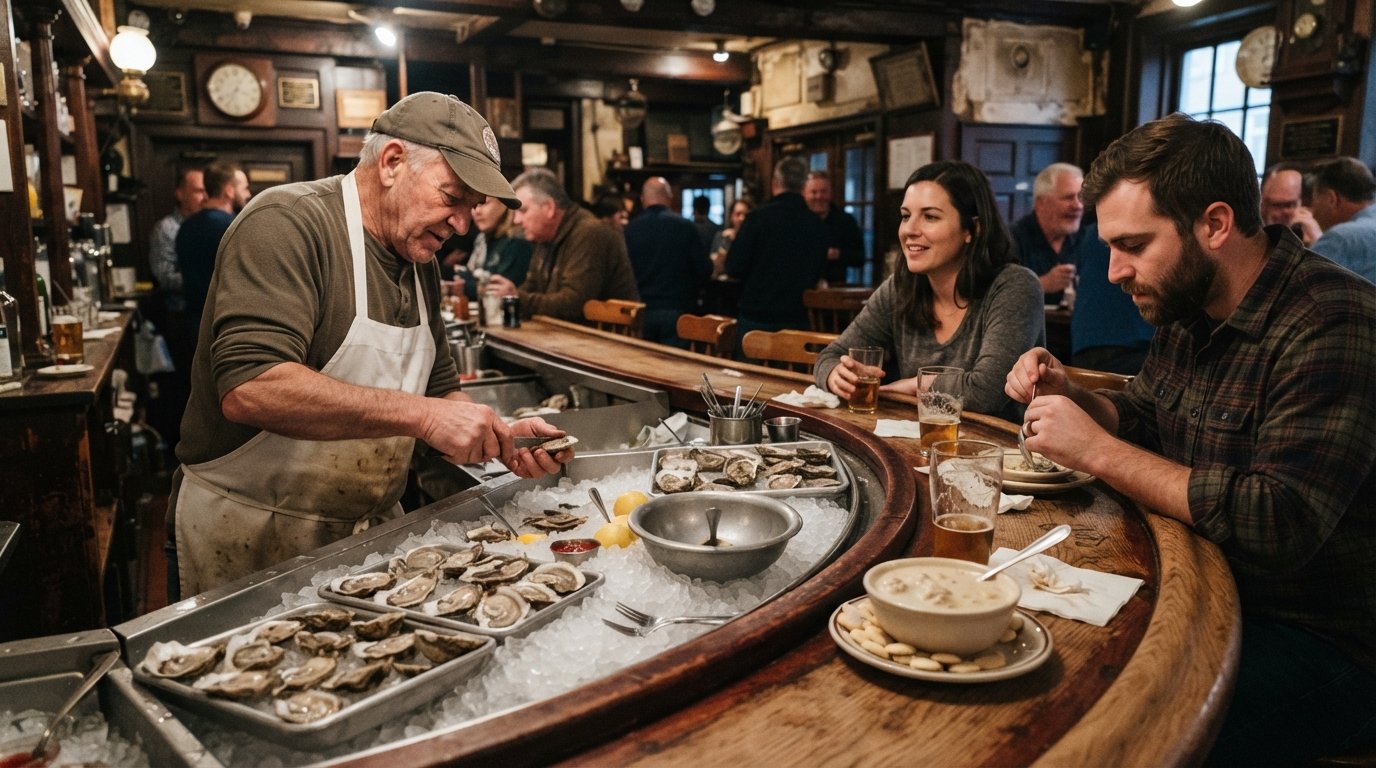
The most Boston thing you can do here is sit down to a meal that doubles as a history lesson. Union Oyster House at 41 Union Street has been serving since 1826, making it the oldest continuously operating restaurant in America, and by the time it turned 200 in 2026 it had long since become both institution and ritual. The ground-floor oyster bar is the place to do it properly: a dozen oysters, a cup of clam chowder, the kind of lunch that makes you feel as if you have stepped into the city’s long memory without leaving the room.
For another classic, Parker’s Restaurant inside the Omni Parker House on School Street is where Boston Cream Pie and the Parker House roll were born. The hotel completed a $65-million renovation in August 2025, but the dining room still carries the gravity of a place that knows exactly what it is. It is the sort of room where a pastry can carry the weight of a city’s appetite.
The newer downtown is more adventurous than its reputation suggests. Ruka Restobar, inside the Godfrey Hotel at 505 Washington Street, does polished Peruvian-Japanese Nikkei cooking: ceviche, tiraditos, serious sushi and wok dishes, all from the team behind Yvonne’s. It feels like the sort of restaurant that belongs in a district with a lot of foot traffic and not much patience for fuss.
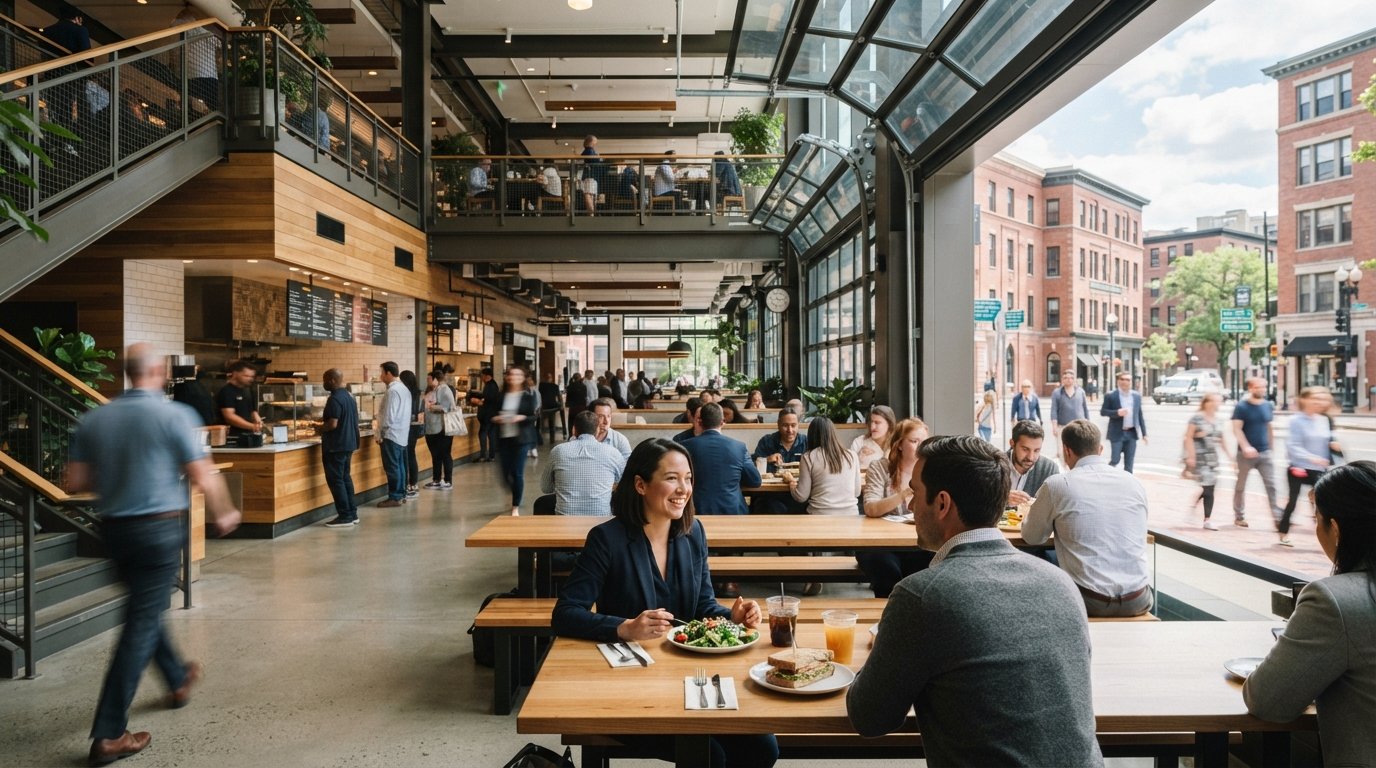
High Street Place at 100 High Street is the opposite kind of useful: a bright 20-vendor food hall carved out of an office atrium, with a retractable glass wall for open-air lunches. It is exactly the kind of place downtown needs at midday — fast, varied, and close enough to the towers that nobody has to waste a minute. JM Curley on Temple Place has been slinging one of the city’s best burgers since 2011, and if you know to push past the heavy burgundy curtain at the back, Bogie’s Place waits inside as a reservation-only, 18-seat velvet chophouse. The curtain is part of the pleasure. So is the fact that the room stays small.
Downtown used to empty out after office hours. That is no longer the whole story. The best places to drink here are often the ones you would walk past if you were not paying attention, and the city’s recent after-dark revival has an element of misdirection to it.
Yvonne’s, at 2 Winter Place in the old Locke-Ober space, is entered speakeasy-style through what looks like a hair salon. Inside, it is all velvet, chandeliers and a Library Bar lined with books, the sort of room that makes a dinner reservation feel like a small act of discovery. The menu leans Mediterranean, and the mezze spread with pita and ham and hot honey is worth ordering without overthinking it.
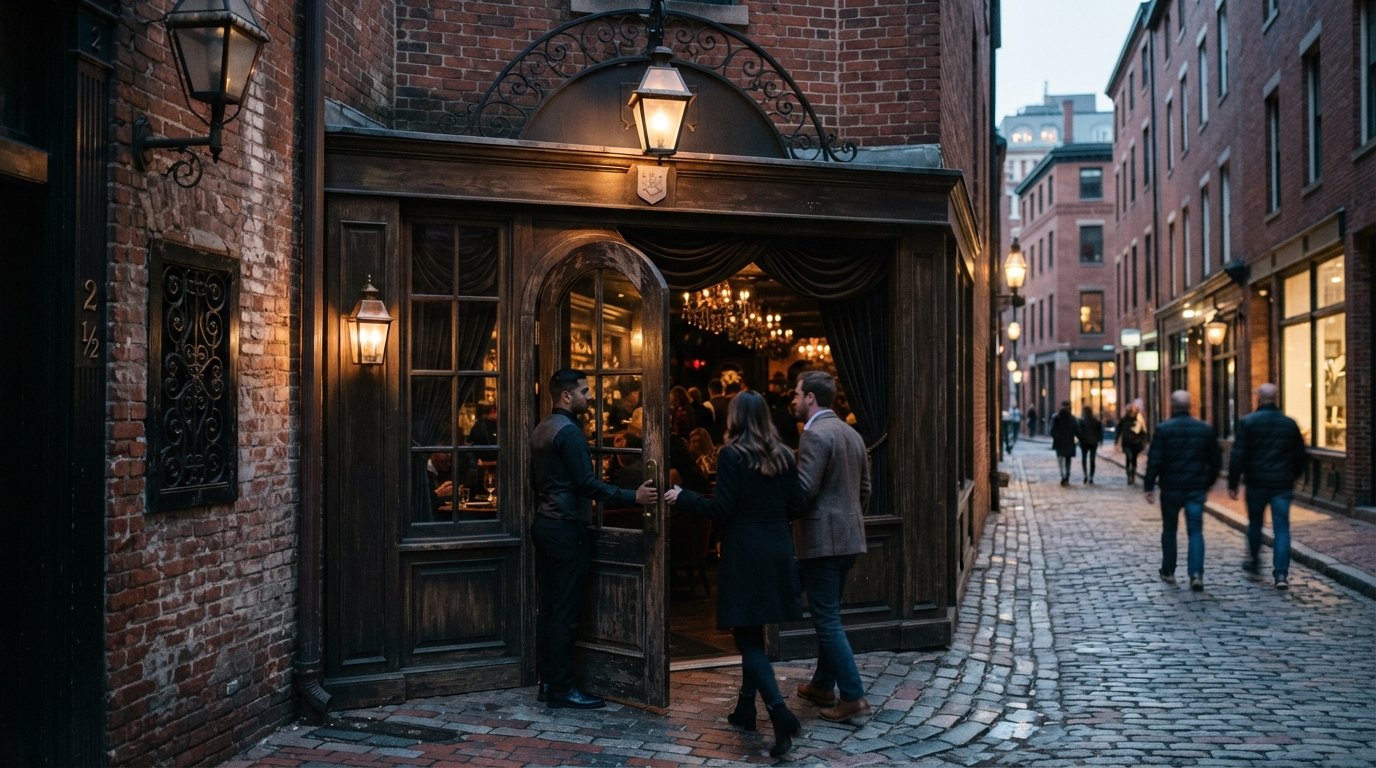
A block away, The Wig Shop at 27 Temple Place hides behind the still-lit neon sign of a wig store that traded there for more than 50 years. Step through and the mood changes entirely: retro-glam cocktails, champagne, over-the-top canapés, low light, a little theatrical shimmer. Reservations are limited to the 5–7pm window; otherwise it is walk-in, with only a 15–20 minute wait at most. It is one of those downtown rooms that makes time feel slightly elastic.
The hotel bars are just as serious. The Fed at The Langham sits in the former Federal Reserve Bank of Boston on Post Office Square and leans into the building’s old authority with a clubby, 1920s-styled room and a Treasury Collection of cocktails themed to world currencies. USA Today readers ranked it the No. 4 hotel bar in America in 2024, which feels entirely plausible once you are inside. Amber Road at 100 Federal Street takes a different tack, building its 22-seat bar around a central cherry blossom tree; the room is sleek, intimate and slightly surreal in the middle of all that office architecture. For a more old-Boston mood, The Last Hurrah inside the Omni Parker House is a mahogany-and-leather political watering hole named for the 1956 novel, and it remains one of the district’s most dependable places to settle in with whiskey.
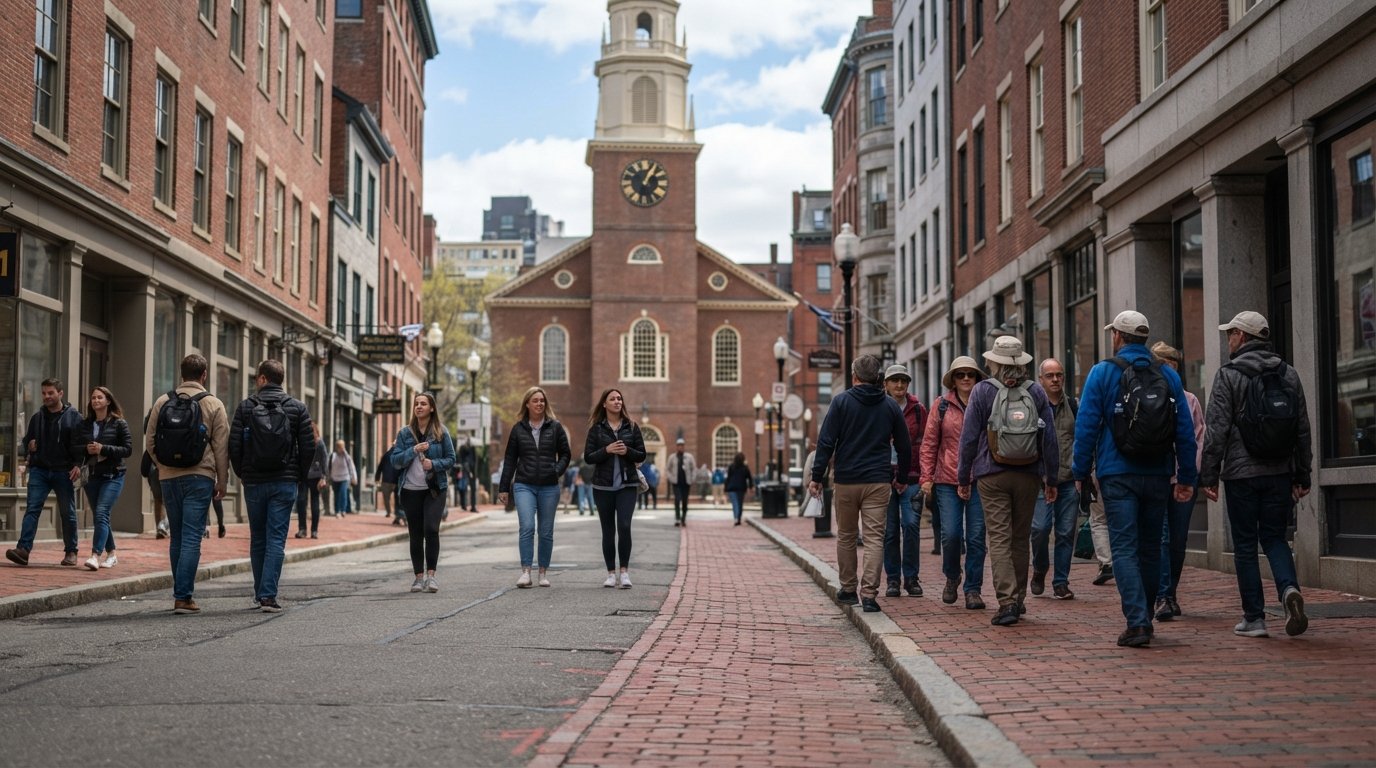
If you are here for the city’s story, start with the Freedom Trail. This is one of the most concentrated stretches of it, and it gives the district its shape as much as any map does. Begin at Boston Common, where the 2.5-mile trail starts, then follow the red-brick line up Washington Street to the Old South Meeting House, where the Boston Tea Party was set in motion, and on to the Old State House, with its museum and the Boston Massacre marker below the balcony. From there, Faneuil Hall is only a few minutes away — the hall itself is temporarily closed for renovations, but Quincy Market and the surrounding marketplace stalls remain open.
Beyond the trail, the district has a few indoor diversions that make sense on a rainy afternoon. The Museum of Illusions near Downtown Crossing is a hit with families, and the area is thick with escape rooms if you like your sightseeing to come with a locked door. For a breather, Post Office Square — properly Norman B. Leventhal Park — is a rare pocket of green among the towers, the kind of place where office lunchers claim every bench on a warm day. And when evening comes, the grand Boston Opera House and the Orpheum Theatre on the Washington Street theatre strip keep the sidewalks busy with touring shows and concerts.
The Boston Opera House, a lavishly restored 1928 vaudeville theater.
The Old State House, where the Declaration of Independence was first read to Bostonians.
The pedestrianized shopping streets of Downtown Crossing.
Downtown Crossing has been Boston’s shopping street for well over a century, and it still does what it says on the tin: more stores, more foot traffic, more bargains than polish. The anchor is Macy’s in the former Filene’s building at the intersection, with a huge Primark close by and a ground-floor Roche Bros. supermarket in the restored Burnham Building. Marshalls, Old Navy and TJ Maxx round out the off-price logic of the place. This is not a district for delicate browsing. It is where you come for basics, for value, for the practical pleasure of finding something you needed anyway.
What makes the shopping feel distinctive is the setting. Because the mall along Washington, Winter and Summer Streets is car-free, you can drift from shop to shop without fighting traffic. Street vendors and buskers give the middle of the street a little theatre, and the whole area feels more like a working public room than a retail corridor. It is busy, unpretentious and very Boston in the way it refuses to dress itself up as anything else.
This is one of the most practical bases in Boston if you want to spend your days on foot. You are on the Freedom Trail, a step from Downtown Crossing station, and within walking distance of Beacon Hill, the North End and the waterfront. The trade-off is obvious and, for some travellers, worthwhile: this is a commercial district first, not a leafy residential one. The blocks right on the pedestrian mall are lively, convenient and sometimes noisy. The Financial District towers and Post Office Square are calmer, though they can feel empty after office hours and on weekends. The fringes near the old Combat Zone and the Chinatown edge are the roughest around at night.
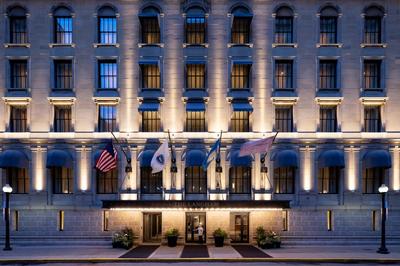
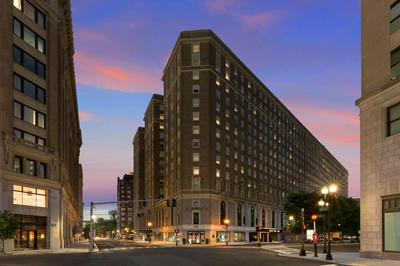
The hotel options reflect that range. The Godfrey Hotel on Washington Street is the most design-forward choice and sits over Ruka. The Omni Parker House on School Street is the grand historic pick, freshly renovated in 2025. Around Post Office Square, The Langham is the polished luxury option. It is a mid-to-upper-range area overall — usually cheaper than the Seaport or Back Bay, but rarely a bargain.
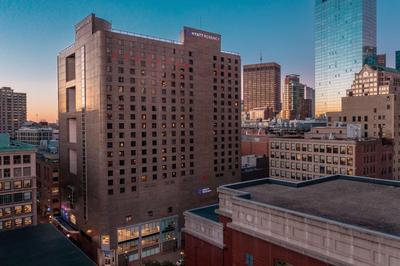
Our best-rated stays in this neighbourhood. Prices are approximate “from” rates — confirmed at the provider when you continue. We may earn a commission if you book through our partners — at no extra cost to you.
In this area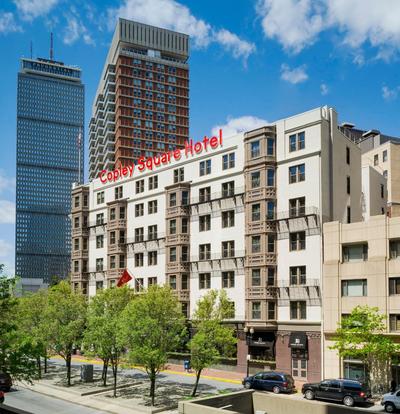 In this area
 In this area
 In this area
 In this area
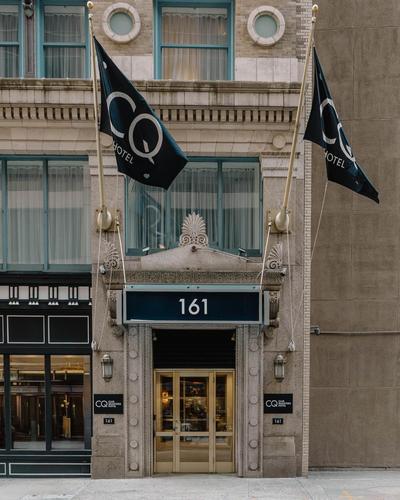 In this area
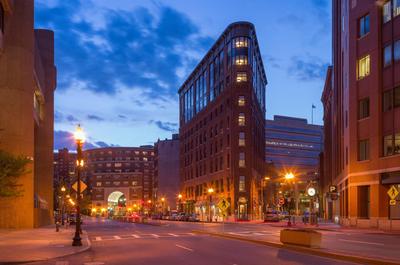 In this area
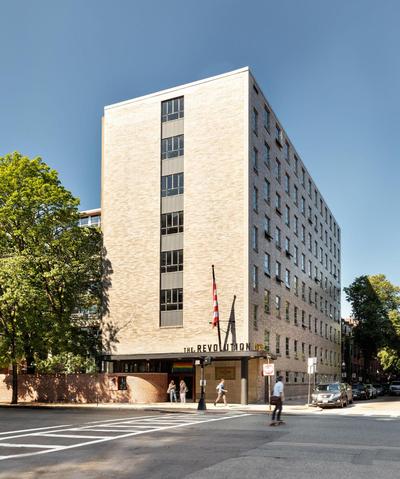 In this area
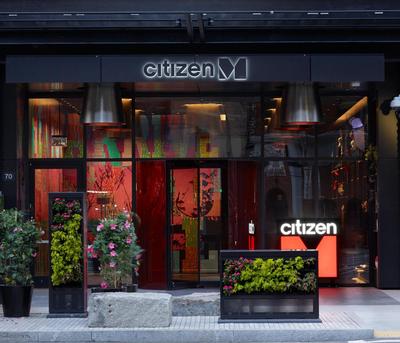 In this area
You barely need transit once you are inside the district. It is flat, compact and walkable end to end in about 15 minutes. When you do need the MBTA, Downtown Crossing station is one of the system’s four hub stations, served by the Red Line and Orange Line and connected underground to the Green Line at Park Street through the Winter Street Concourse without leaving the paid area. Thirteen bus routes stop here too, which is why the area feels less like a neighbourhood than a hinge.
State Street, with the Orange and Blue Lines, sits at the edge of the Financial District, and South Station, with the Red Line and commuter rail, is also close by. For the airport, take the Blue Line from State to Airport station, which takes roughly 15–20 minutes plus the shuttle, or the Silver Line SL1 bus from South Station straight to the Logan terminals. Beacon Hill, the Public Garden, the North End and the Seaport are all a 10–20 minute walk away, which is part of the reason this district makes such a useful base.
If you stay here, you are choosing convenience over softness. That is the deal. Downtown Crossing and the Financial District are not trying to be charming in the conventional sense. They are trying to function. The surprise is how much life has grown inside that function: a hidden bar behind a wig shop, a velvet chophouse behind a curtain, a food hall in an office atrium, a Revolutionary-era balcony over a traffic island, and a pedestrian mall where the city still walks straight down the middle of the street.
Gallery
Yes, if central sightseeing is your priority. You are on the Freedom Trail, close to a major transit hub, and within a short walk of Beacon Hill, the North End and the waterfront. The trade-off is that this is a working commercial district, so it feels busy and sometimes gritty rather than leafy or residential.
By day it is crowded and generally fine, with shoppers, office workers and tour groups everywhere. At night the core stays reasonably active thanks to theatres and bars, but the emptier office plazas and the edge toward Chinatown and the old Combat Zone can feel edgier. Use normal big-city care and stick to well-lit streets.
The standouts are Yvonne’s at 2 Winter Place, The Wig Shop on Temple Place, The Fed at The Langham on Post Office Square, Amber Road on Federal Street, and The Last Hurrah inside the Omni Parker House.
It is best for sightseeing, shopping and speakeasy-style cocktail bars. It is Boston’s most central, most transactional square mile, with the Freedom Trail, major transit connections and the city’s biggest downtown retail concentration all packed together.