
Boston's street grid gives up somewhere past the Public Garden, and what takes over is not disorder but a plan: a chain of parks, ponds and reclaimed marsh that Frederick Law Olmsted strung across the city between the 1870s and 1890s to solve problems Boston had mostly stopped noticing — chronic flooding, an open sewer disguised as a river, a fast-growing population with nowhere green to go. Walk the whole seven miles and you move through a century and a half of civic argument in a single afternoon, from swan boats to a working Second World War victory garden to a municipal golf course older than the Red Sox. Almost nobody manages the far end.
The Start: Boston Common and the Public Garden (Beacon Hill / Back Bay)
Begin, as most walking tours of Boston do, at Boston Common & Frog Pond (Beacon Hill). It isn't actually an Olmsted design — the Common predates him by two and a half centuries — but it's the conventional jumping-off point for the Necklace walk, and since the Freedom Trail covers its history in more depth elsewhere, treat it here as a start line rather than a destination: free, always open, no booking, big enough for any size of group.
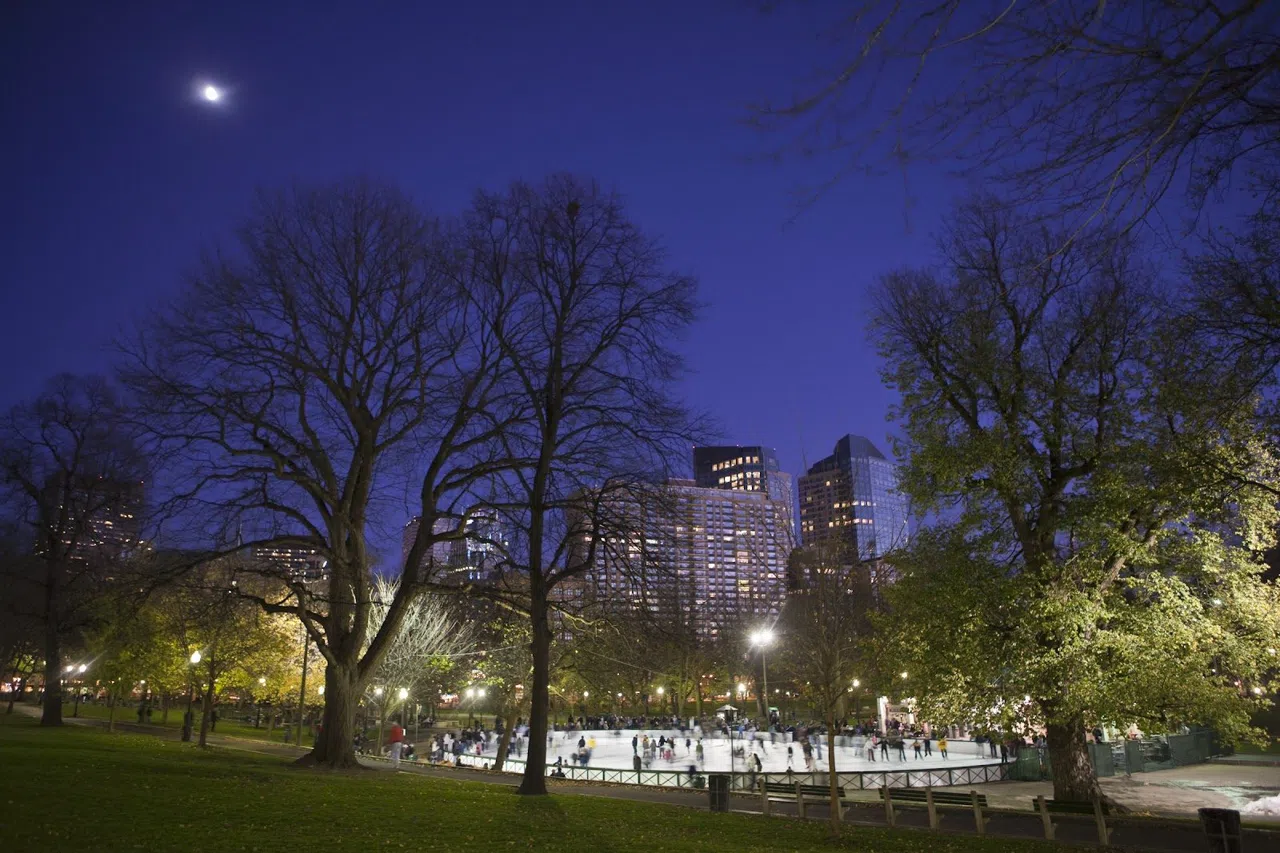
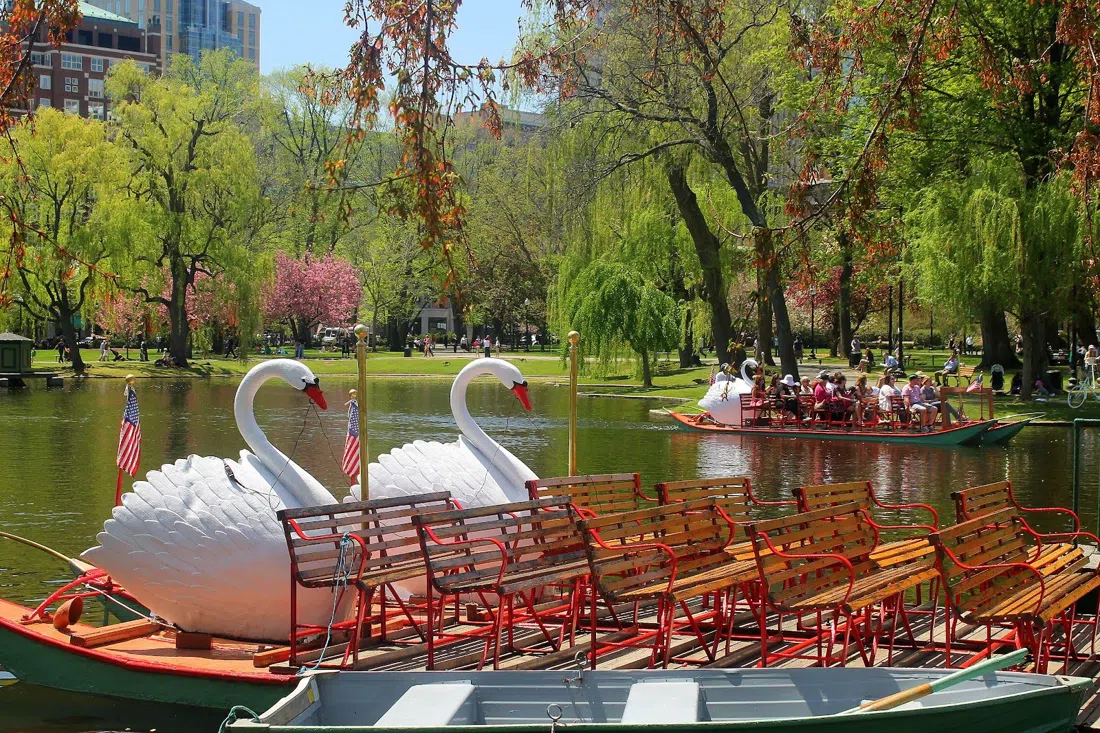
Cross Charles Street and you're in the Public Garden & Swan Boats (Back Bay), where the character of the walk actually begins. The swan boats are a family business — the Pagets have run them since 1877, which makes 2026 their 149th season — and they operate on a walk-up basis: no reservations, and the queue moves in batches, so school groups and tour parties don't need to plan ahead. Rides run $5.50–$9.50 per person on top of free garden entry, and the season is fixed: April 18 through September 7, 2026. Outside that window you get the garden — still worth the ten minutes — but not the boats. This is the stretch of the Necklace that ends up on the most postcards, and if you're here on a Saturday in July, expect it.
The Connector: Commonwealth Avenue Mall (Back Bay)
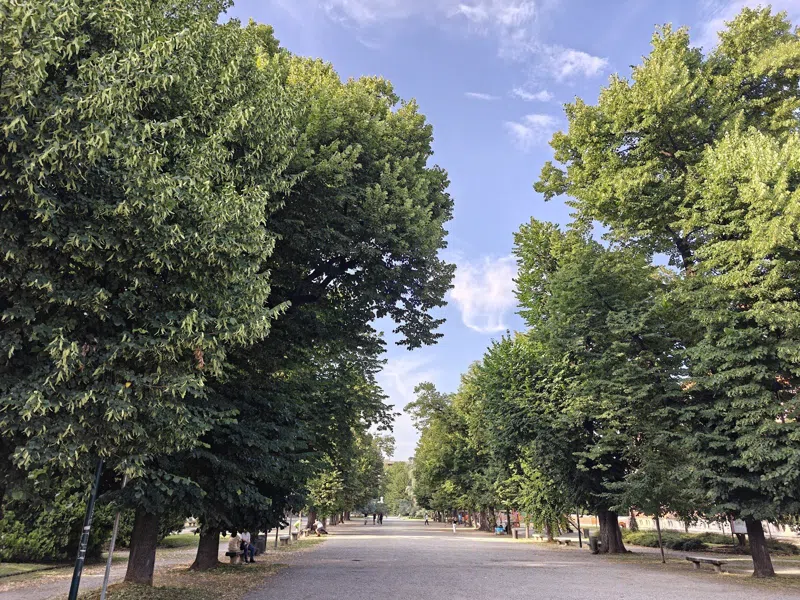
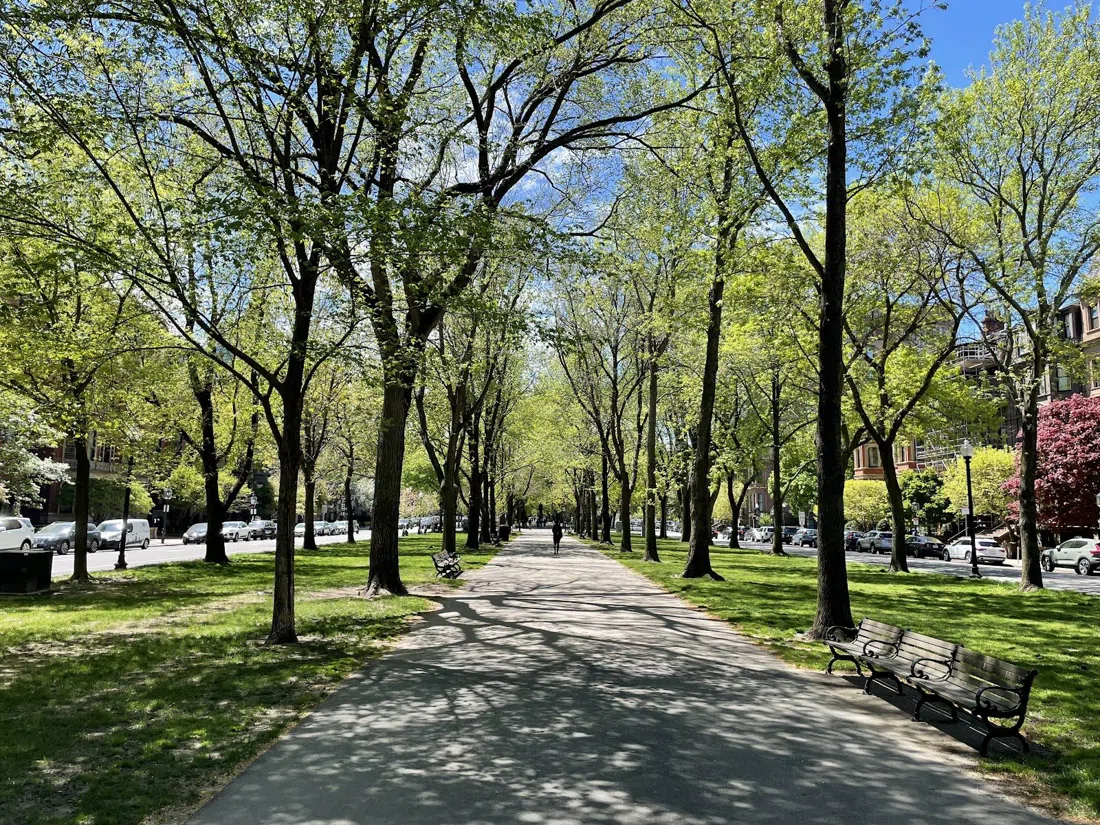
From the Public Garden, the Commonwealth Avenue Mall (Back Bay) runs the length of the neighborhood as a tree-lined median, doubling as sidewalk and park. It's free, always open, and takes about twenty minutes to walk end to end — less if you don't stop for the statues. It's easy to treat as connective tissue and rush through, but it's worth slowing down for: this is the stretch that shows what Olmsted and his collaborators were actually attempting, threading a formal, planted promenade through a real street grid rather than around it. No other section of the Necklace makes the urban-planning ambition as legible.
Back Bay Fens: The Cultural Core (Fenway)
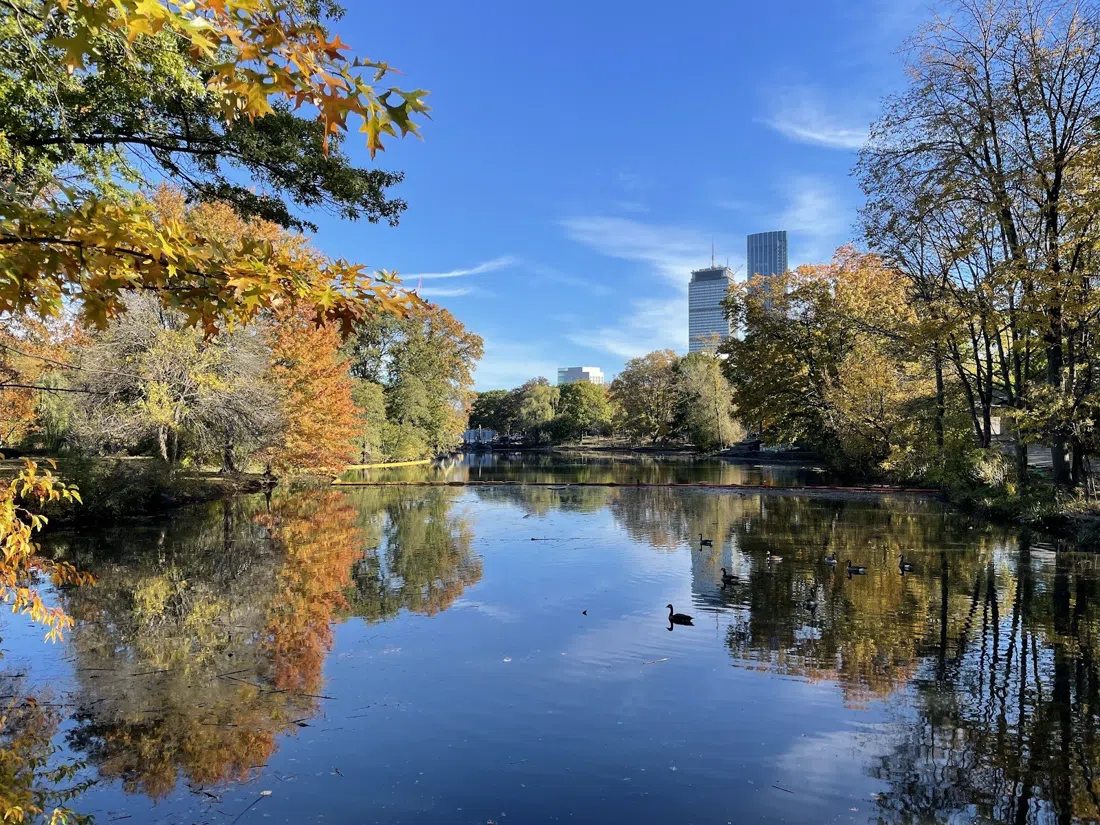
The Mall ends at the Back Bay Fens (Fenway), and this is where the Necklace turns genuinely unusual — it's not a park that was designed and then had a purpose found for it, but a flood-control marsh, drained and reshaped in the 1880s to fix Boston's sewage and tidal problems, that only later got planted up as parkland. It's free, open, and manageable for a self-guided group walk. It's also the densest cultural stretch of the whole route: both the Museum of Fine Arts and the Isabella Stewart Gardner Museum sit on its border, so this is the natural point to combine the Necklace with a museum stop.
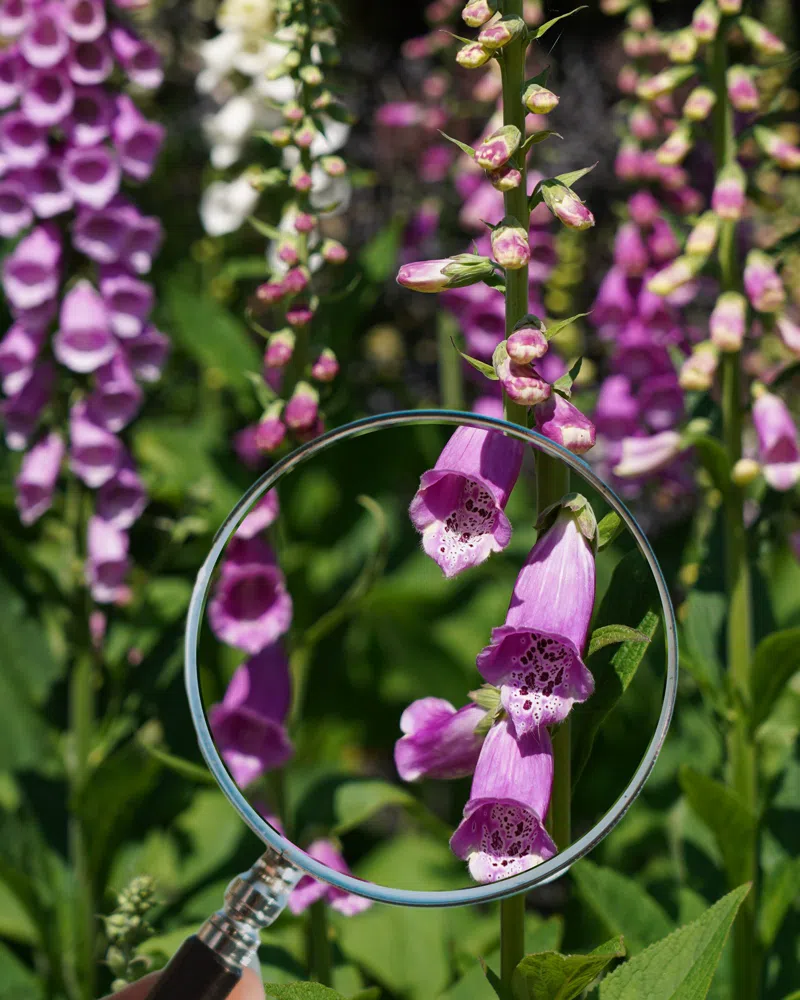
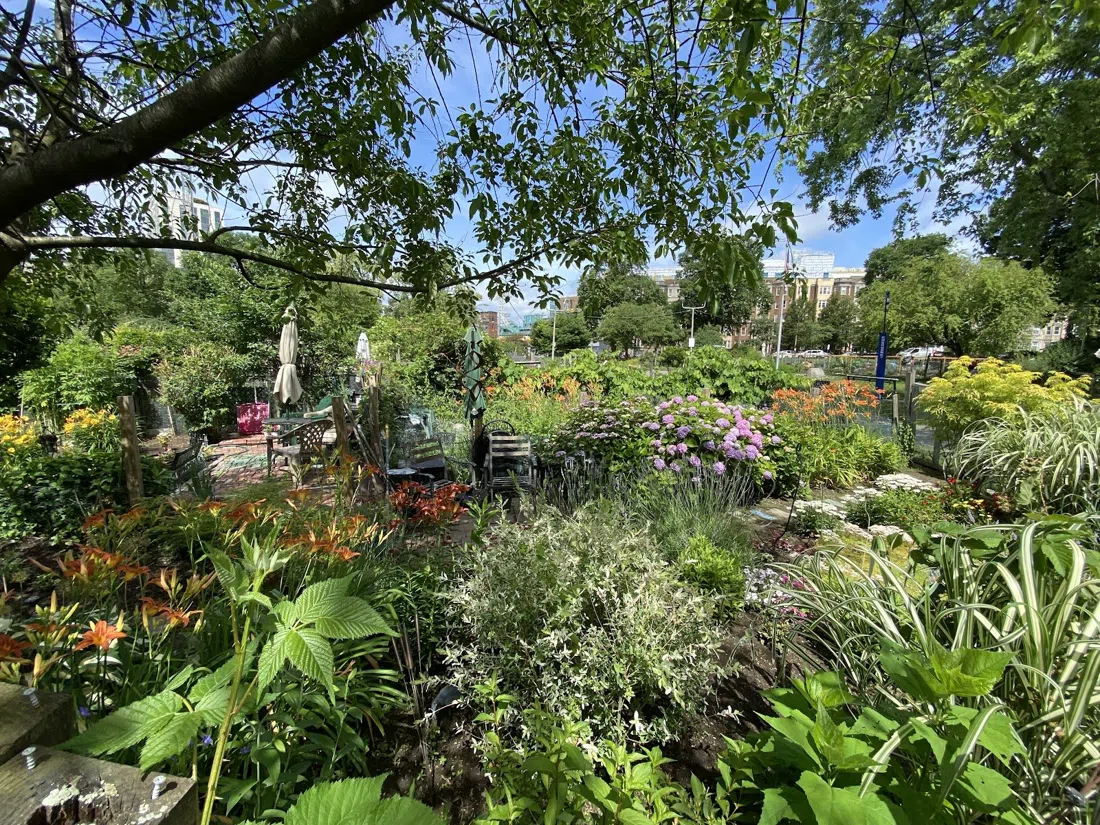
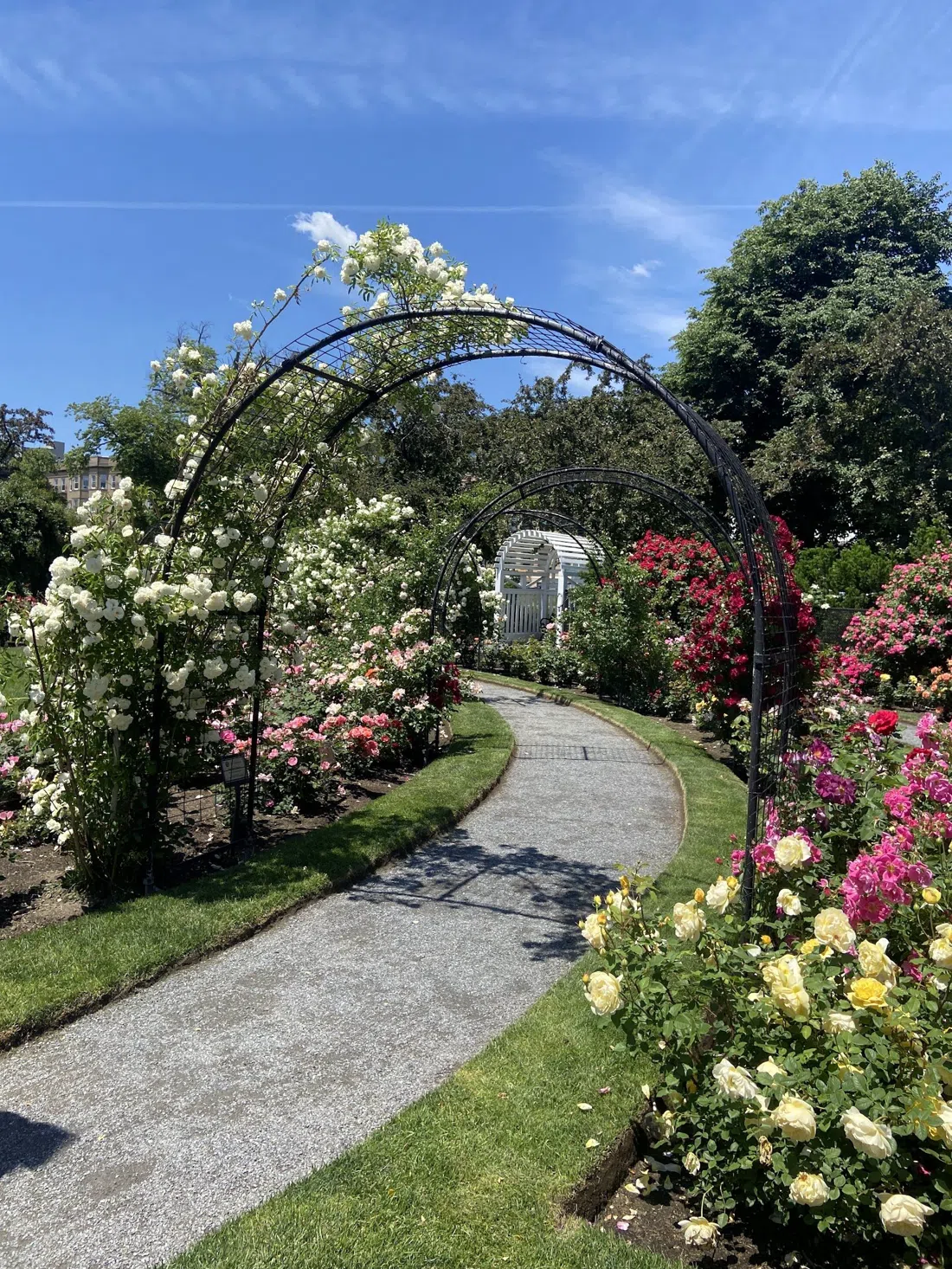
Within the Fens, two smaller sites reward a detour. The James P. Kelleher Rose Garden (Fenway), founded in 1931, is free and open — Monday to Friday 7am–5pm, weekends 10am–5pm, May through October — and does double duty as an event space; the Conservancy runs its annual Rose Garden Party here for crowds well beyond a casual visit, so expect it busy on a summer weekend. Go in June for the bloom. And the Fenway Victory Gardens (Fenway), established in 1942, is a stop most Boston guides skip past entirely — it's America's last World War II victory garden still on its original site, still worked as individual plots by local gardeners rather than preserved as a museum piece. It's free and always accessible, but the paths are narrow and it suits a couple or a small pair better than a tour group; there's nowhere for fifteen people to stand without blocking someone's tomatoes.
The Active Middle: The Riverway, Olmsted Park and Jamaica Pond (Fenway / Jamaica Plain)
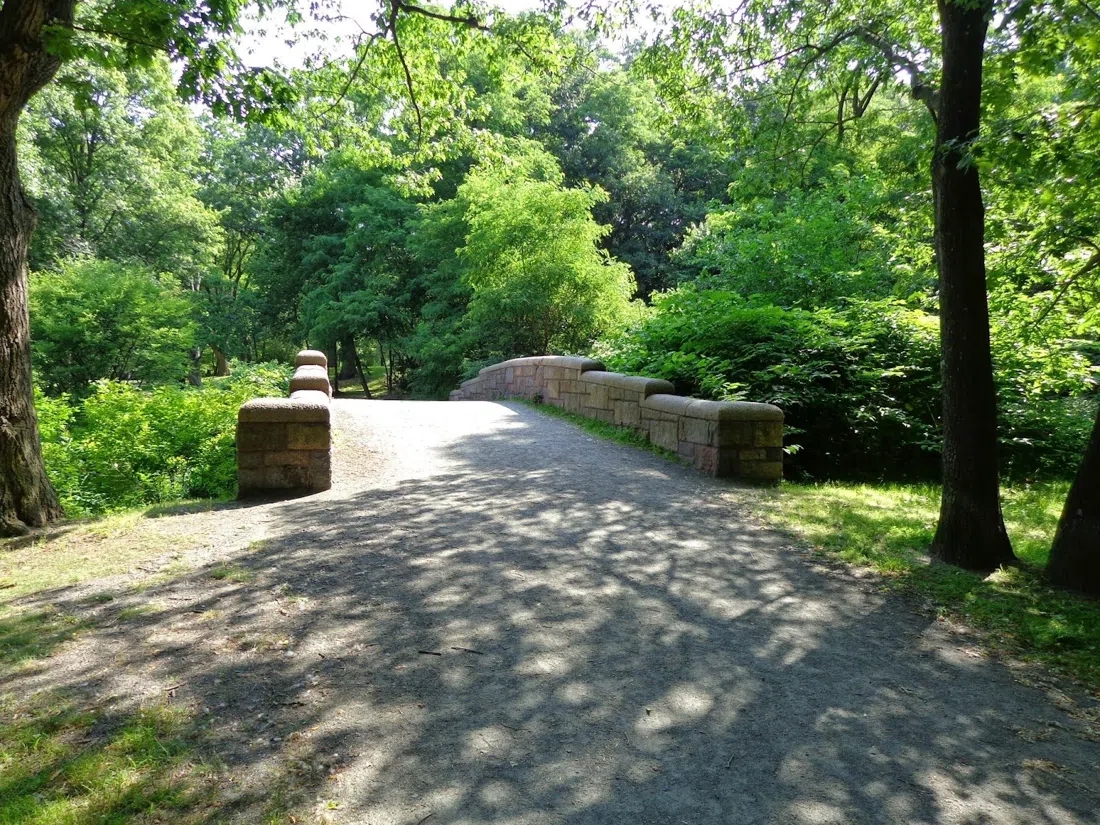
South of the Fens, the Necklace follows the Muddy River through The Riverway & Olmsted Park (Fenway/Brookline line), and this stretch has a genuine restoration story behind it: between 2014 and 2023, the city and the Conservancy daylit sections of the river that had been culverted underground for decades and rebuilt the stream to something closer to Olmsted's original width. It's free, open, and well suited to a guided walking tour — the paths are wide enough for a group, and there's more to explain here than at almost any other stop, since the "before" and "after" of the restoration is still visible if you know where to look.
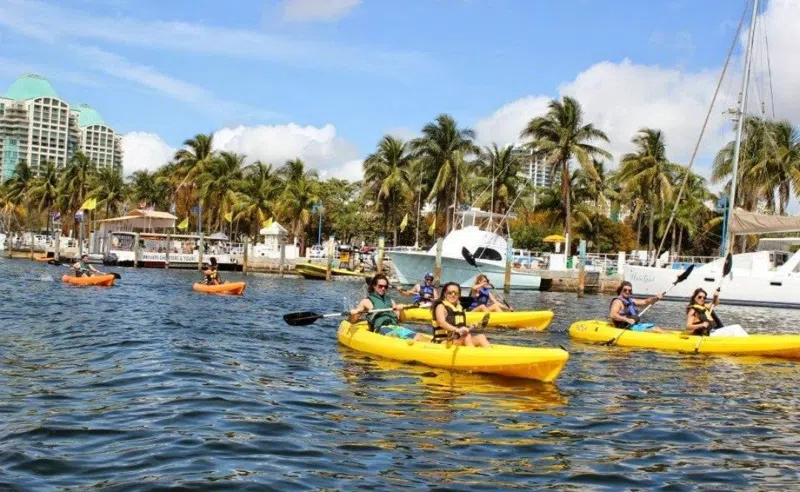
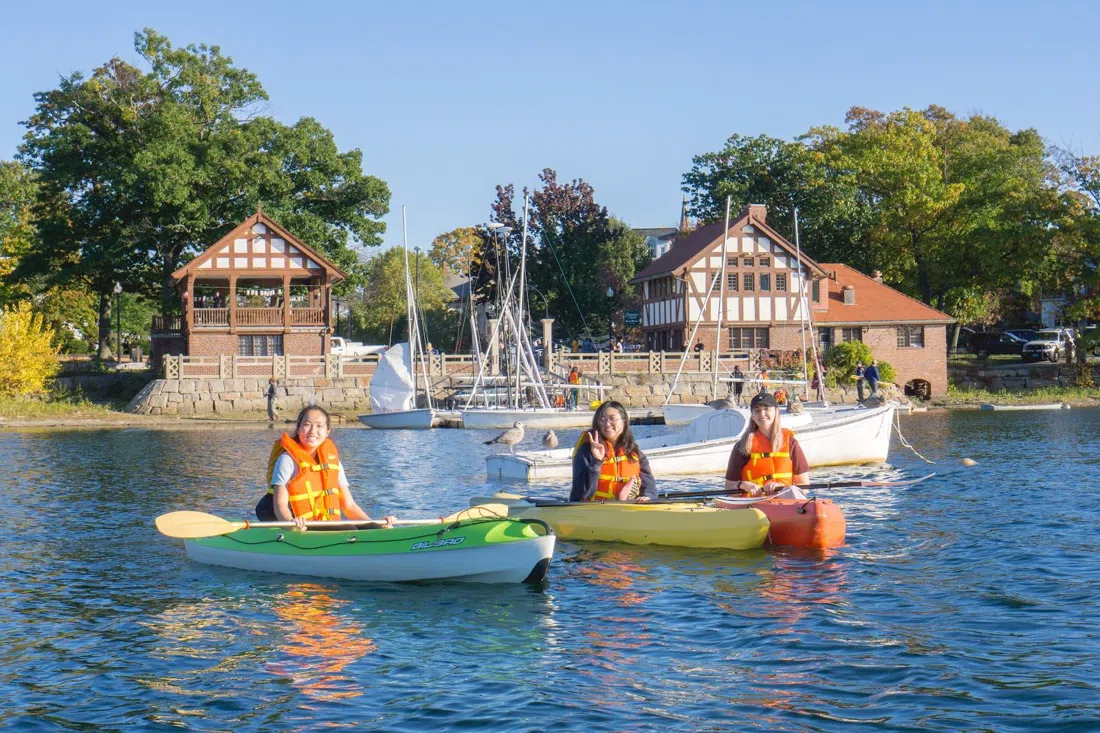
The path opens out at Jamaica Pond & Boathouse (Jamaica Plain), the largest body of water on the Necklace and the one stop built for an active visit rather than a passive walk. Courageous Sailing runs seasonal operations here, roughly April through October, with rowboat, kayak and paddleboard rentals in the $20–30/hr range; walking the pond itself is free. Group sailing sessions can be arranged directly through Courageous Sailing rather than walk-up, so anyone bringing more than a couple of people should book ahead. This is the point on the walk to plan a longer stop — an hour on the water, not five minutes at the railing.
The Arboretum and the Man Himself (Jamaica Plain)
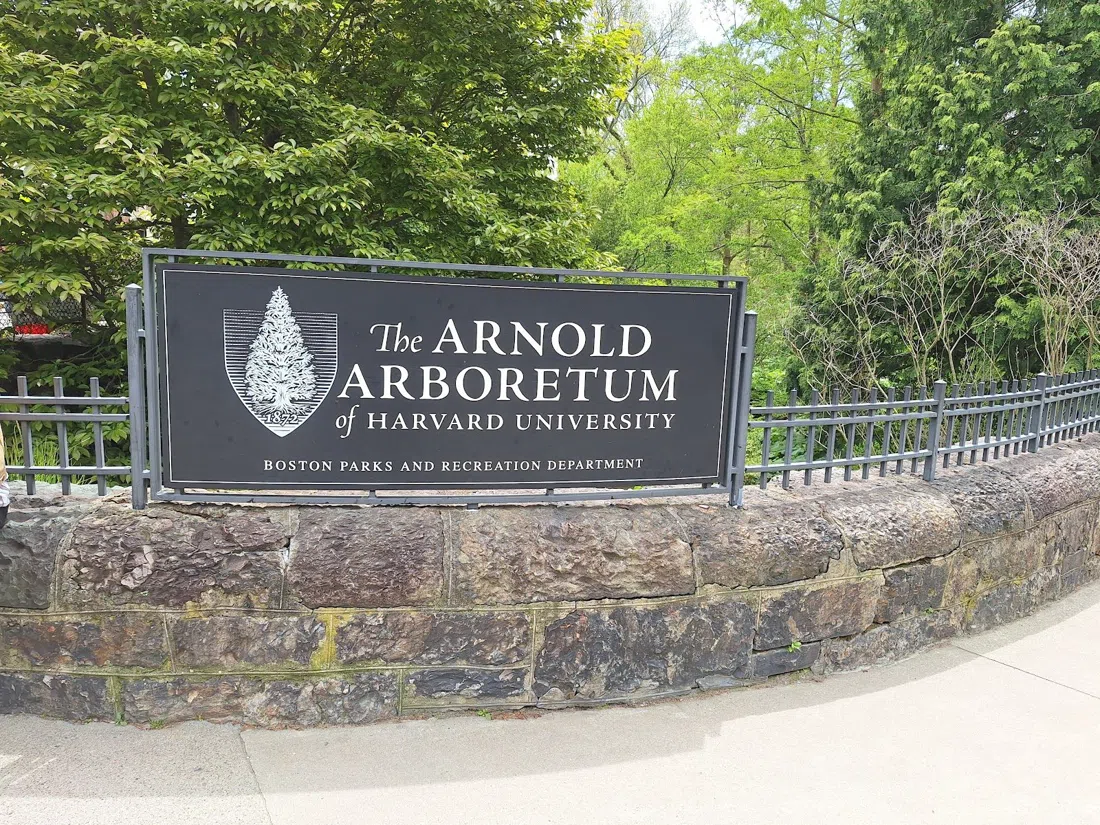
Two stops here sit slightly off the direct walking line but justify the detour. Arnold Arboretum (Jamaica Plain) is technically Harvard property, not city parkland, but it was folded into Olmsted's original plan and remains under Conservancy stewardship — it's the botanical high point of the whole route, free, open dawn to dusk daily, and the one site on this list set up to host guided group tours by request rather than just tolerate large numbers passing through. Give it more time than you think; it's a working research collection as well as a park, and rushing it defeats the point.
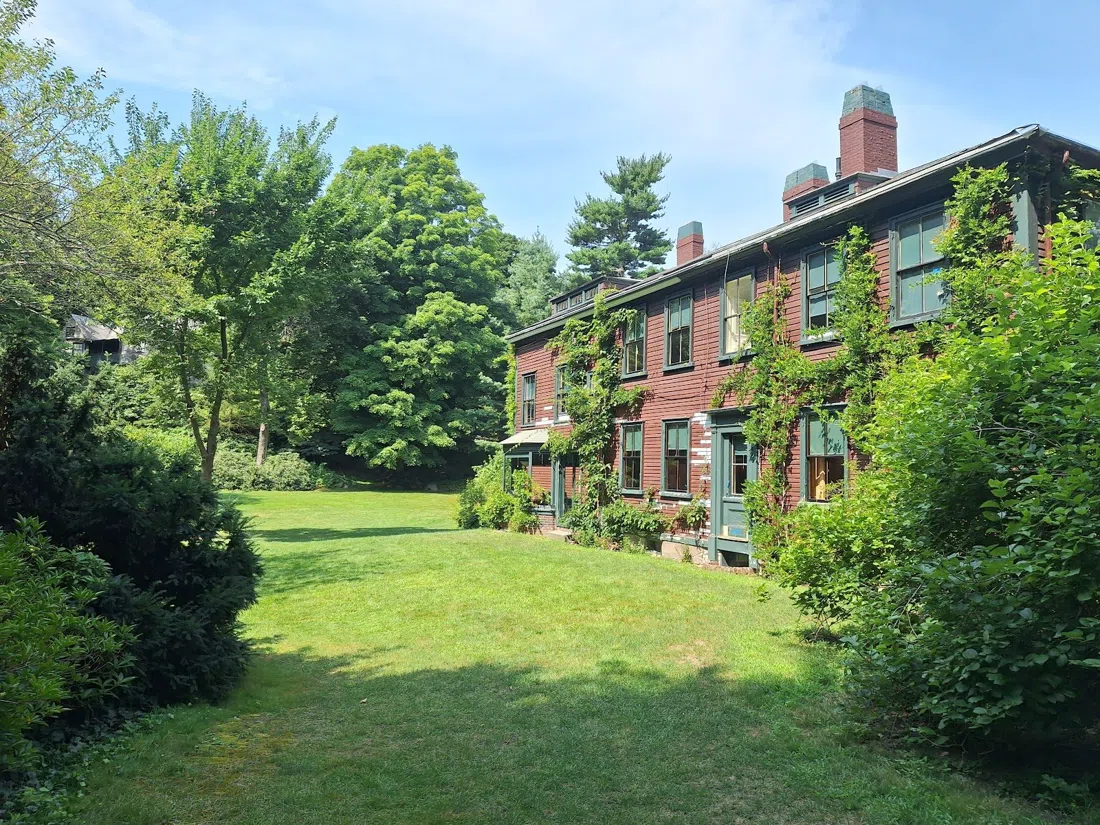
A short walk from the Arboretum, easy to miss entirely if you don't know to look for it, is the Frederick Law Olmsted National Historic Site — Fairsted (Jamaica Plain/Brookline border). This was Olmsted's home and design office, and it is, in a fairly literal sense, the origin point of the entire Necklace concept — the plans for every park on this list were drawn here. It's run by the National Park Service, free, with small-group guided tours on the hour Thursday through Sunday, 9:30am to 4:30pm; the grounds themselves are open dawn to dusk every day even outside tour hours. Most people walking the Necklace never learn it's here, which is a genuine gap in how the route is usually presented.
The Jewel at the End: Franklin Park (Dorchester / Roxbury)
Franklin Park (Dorchester/Roxbury line) was Olmsted's largest single Boston commission and, by his own account, the piece he considered the Necklace's centerpiece — the "jewel," in the phrase that's followed the park ever since. It's free, open, and large enough to absorb a big group picnicking or walking without anyone feeling crowded. It is also, by a wide margin, the least-visited stop on this list for international travelers, most of whom stop at the Fens or the Arboretum and never make the additional distance south. That's arguably the whole reason to come — you get an Olmsted-designed landscape at real scale without the crowds that gather at the Public Garden end.
Two bookable, group-friendly attractions sit inside the park. Franklin Park Zoo (Dorchester), run by Zoo New England, has a formal group-reservation program: bookings of ten or more get a discounted rate ($21.95 versus a standard adult admission around $25), with one chaperone required per ten visitors. It's open year-round — roughly 10am–5 or 6pm in summer, 10am–4pm in winter — and is the single most straightforwardly bookable stop on the entire Necklace if you're traveling with a group and want firm logistics rather than a walk-up plan.
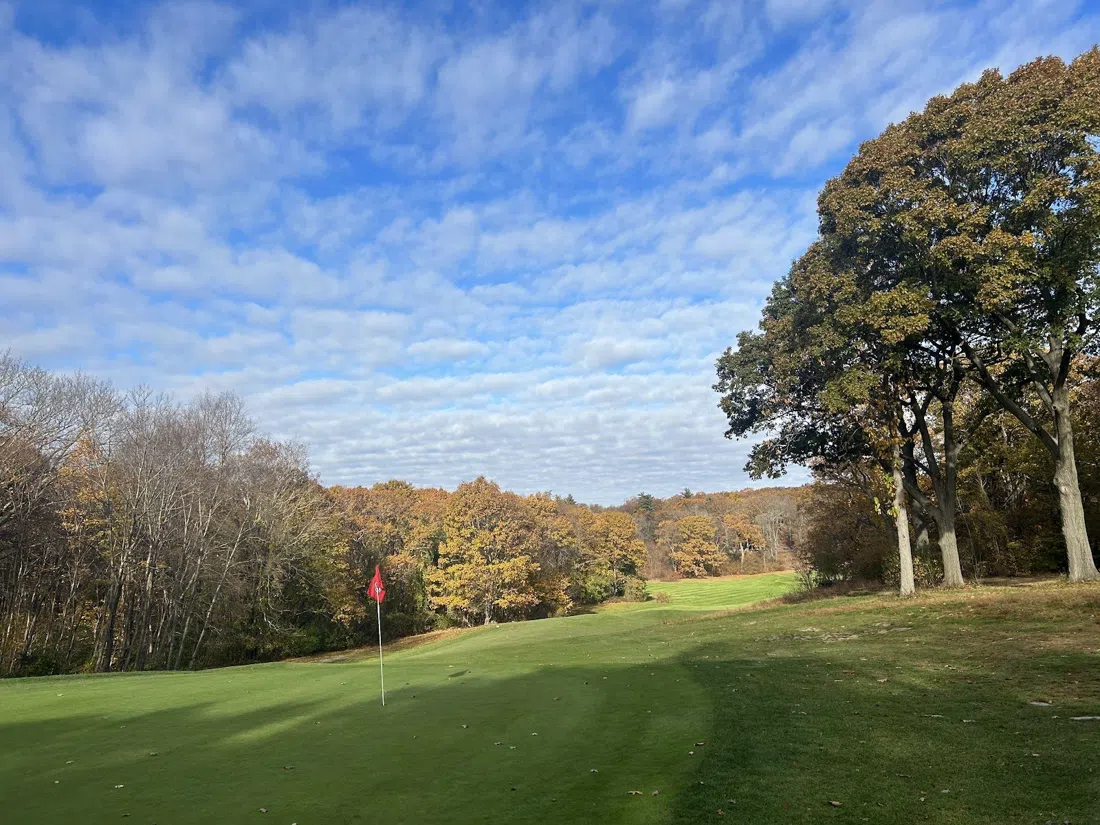
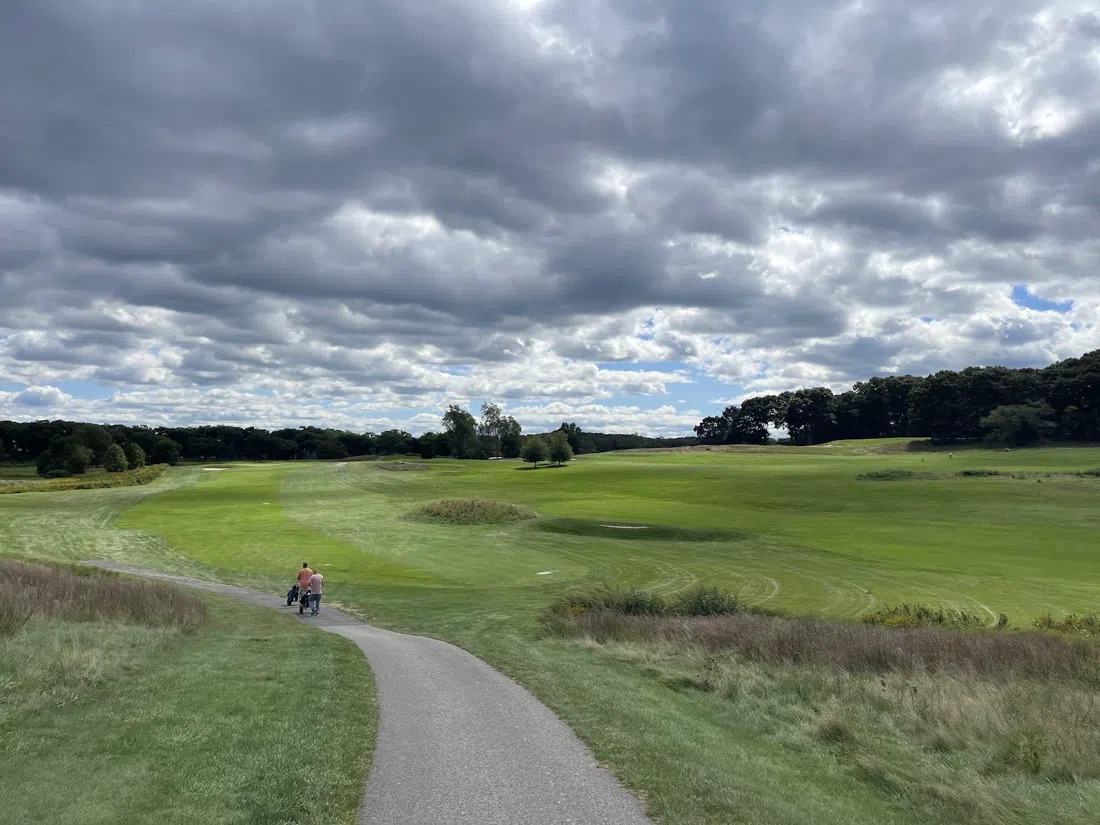
Nearby, the William J. Devine Golf Course at Franklin Park (Dorchester) opened in 1896, which makes it the second-oldest public golf course in the United States — older than most of the buildings around it, and a fact that surprises people who assume Franklin Park is only a picnic-and-zoo stop. It's public and bookable in advance for outings and groups, with a round running roughly $30–45 (Boston residents pay less). If golf isn't the reason you came to Boston, it's still worth knowing it's there — it's one of the more improbable pieces of verifiable history on the whole route.
Walking It With Help
If the idea of navigating seven miles of linked parkland solo is off-putting, start instead at the Emerald Necklace Conservancy's Shattuck Visitor Center (Back Bay Fens), which runs docent-led group walking tours from May through October — free, with a suggested $10 donation. The center itself keeps regular hours, Monday to Friday 9:30am–5pm and weekends 10am–4pm. This is the practical option for anyone who wants the history explained in real time rather than looked up afterward, and it's the one stop on this list explicitly built for visitors who'd rather be guided than navigate alone.
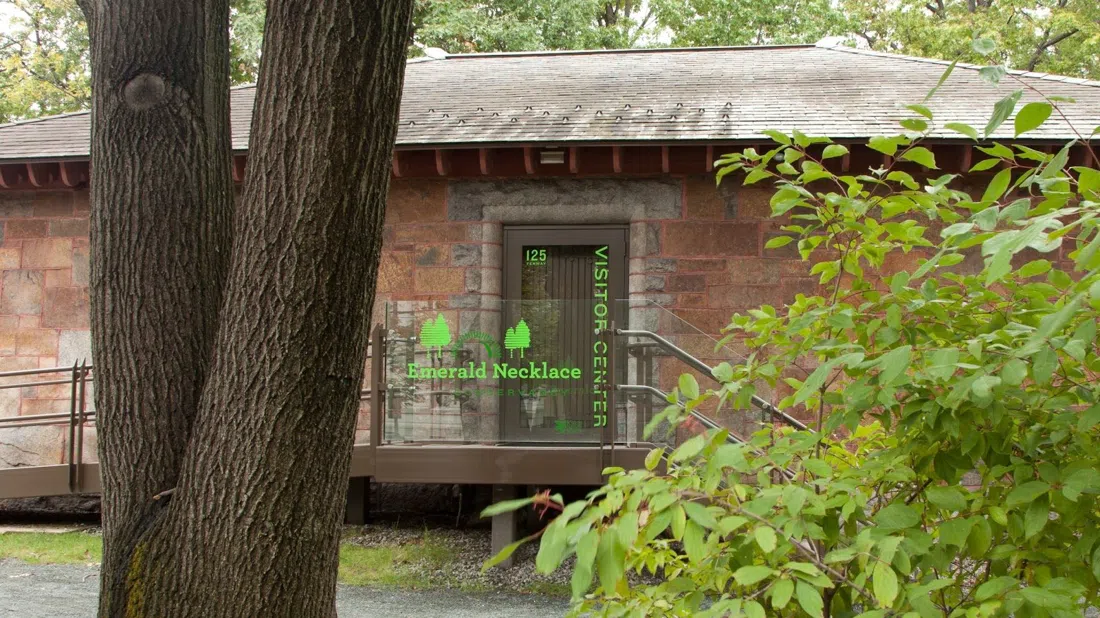
Getting There, and What It Costs
The Necklace runs roughly northeast to southwest, from the Public Garden down to Franklin Park, and the MBTA Green Line E branch and several bus routes shadow most of its length if you want to skip a section rather than walk it. Walking the whole seven miles end to end, at an unhurried pace with stops, is a full day; most visitors are better served picking two or three linked sections — the Public Garden through the Fens is a natural half-day, and the Arboretum through Franklin Park another. Nearly everything on this list is free: the only real costs are the swan boats, pond rentals, the zoo, and a round of golf, so a day on the Necklace can run from nothing to $60–80 a person depending on how many of the paid stops you add. Cash isn't required anywhere on the route — cards or contactless cover the boats, rentals and zoo — though the Shattuck Center's suggested donation is easiest in cash if you're joining a tour. Go between May and September for the gardens and the swan boats; the Arboretum and Franklin Park are worth a visit any time the ground isn't frozen. If you need somewhere to stay while you work through it, a Boston hotel search will turn up options closer to the Back Bay end of the route than the Franklin Park end, which is worth factoring in if you plan to walk more than one section in a day. For the rest of the city beyond the parks, the Boston guide covers it.