
The red line begins in the grass at the edge of Boston Common and ends two and a half miles later at the foot of a granite obelisk in Charlestown, and for most of that distance it is nothing more than a stripe of brick set into the public pavement. Thousands of people step over it daily without once looking down. Follow it deliberately and it becomes something else: sixteen official sites, three distinct neighbourhoods and roughly a century of political argument laid end to end. September is the month the city hands it back to you at a temperature you can actually walk in.
What the red line actually is
The Freedom Trail is not an attraction with a door and a turnstile. It is a route, a painted and brick-inlaid line in public pavement running from the Common through the downtown blocks, across into the North End and over the bridge into Charlestown. Nobody checks anything, nobody counts you, and there is no wrong direction. You can join it halfway, walk it backwards, or abandon it at Faneuil Hall and call the day a success.
What costs money is going inside. Roughly half the sites along the route charge nothing (two burying grounds, a working parliament, a hall with a ranger in it, a commissioned warship), and the paid interiors run from six dollars to twenty. If you intend to go into most of them, budget thirty to forty dollars a head. If you are selective, which you should be, rather less.
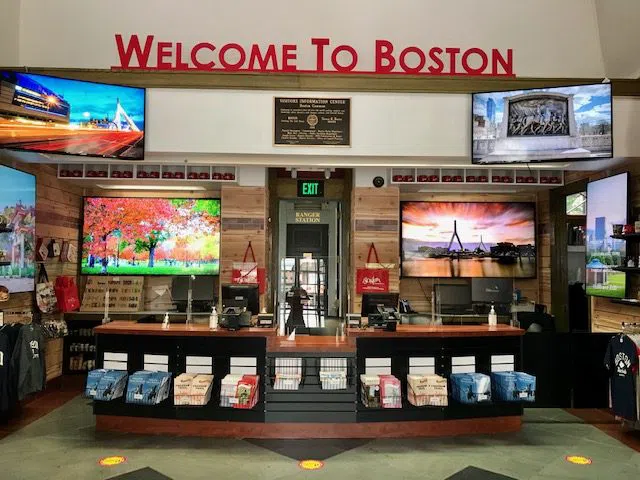
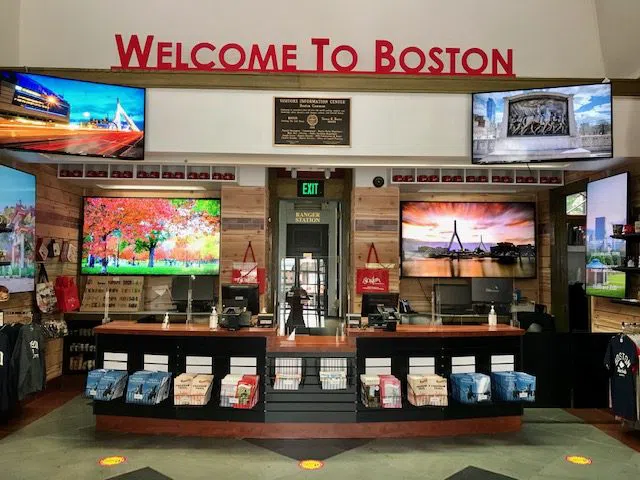
Give the first ten minutes to the Freedom Trail (Boston Common Visitor Information Center) in Downtown, on the Tremont Street edge of the Common. It is the one point on the whole route where you can collect a printed map, use a lavatory and speak to a human being about the day before committing to it. The Freedom Trail Foundation's costumed 'Walk Into History' walks set off from 139 Tremont Street and run about ninety minutes; booked groups and private or custom parties are arranged on 617-357-8300 or by writing to [email protected].
Starting on Beacon Hill
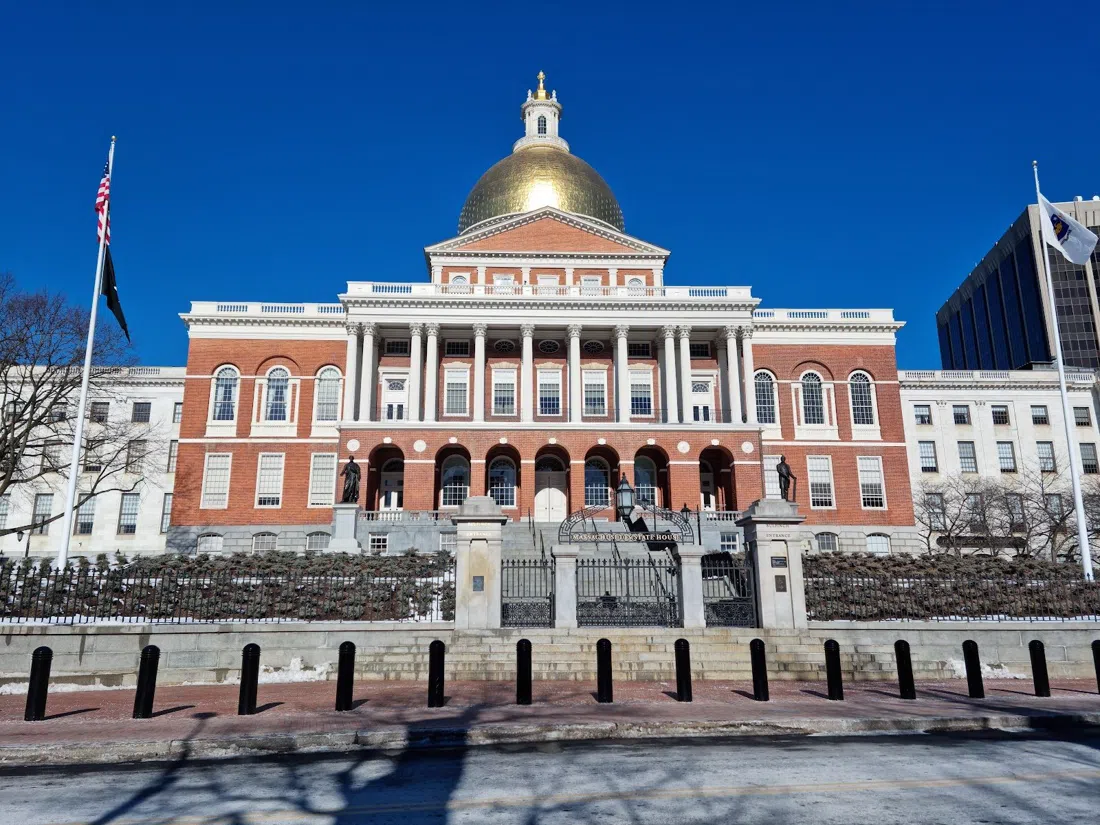
The first climb is the steepest thing you will do before Charlestown. The Massachusetts State House sits at the top of it on Beacon Hill, gold-domed and still in use as a parliament, which is why it behaves like an office rather than a museum. Entry is free and self-guided for parties of one to ten; anything larger must pre-book a free guided tour on 617-727-3676. Tours run about forty minutes, weekdays only, between 10am and 3:30pm, and you go in by the General Hooker Entrance on Beacon Street. The weekday restriction is the single most common trip-up on the whole trail: plan the walk for a Tuesday to Friday morning if you want to see inside, and accept a locked door if you are walking on a Saturday.
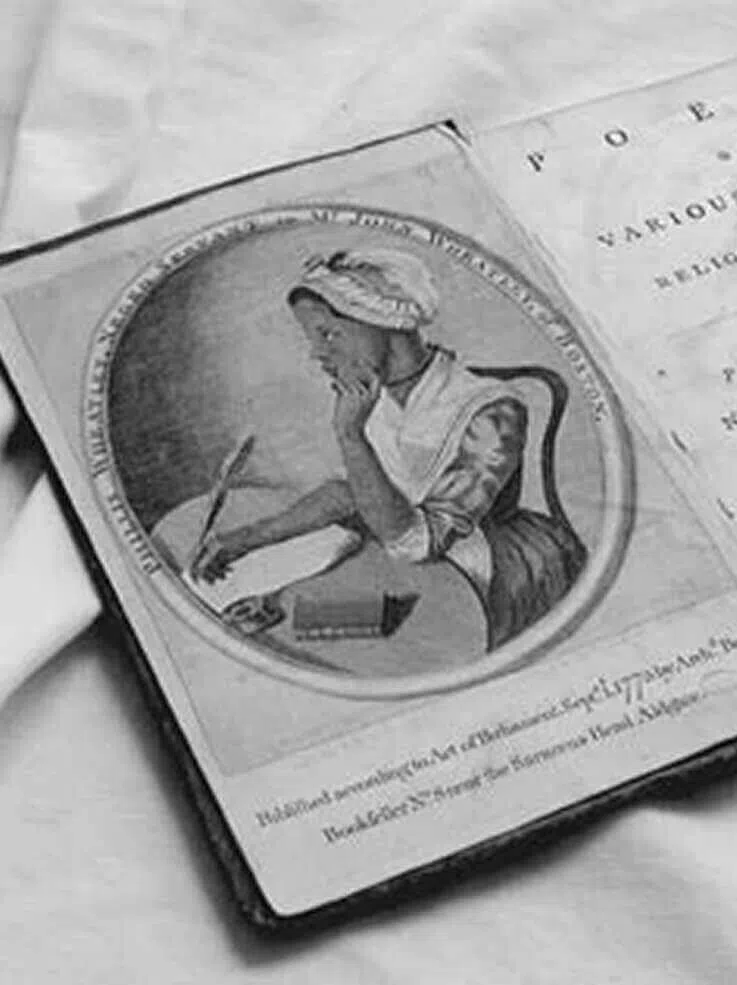
Two minutes off the line, at 46 Joy Street, the Museum of African American History occupies the Abiel Smith School and the African Meeting House on Beacon Hill. It is the honest counterweight to the red line rather than an extension of it: the oldest surviving Black church building in the country, and the abolitionist half of a Revolutionary story the trail itself largely walks past. Entry is timed, Tuesday to Sunday at 10:30am, 11:30am, 1:30pm and 2:30pm, at $10 adult, $8 senior or student and free under twelve. Book ahead if you are more than a couple, because the slot has to be held. Of everything you can add to a Freedom Trail day, this is the one that changes what the day means.
The downtown blocks where the arguing happened
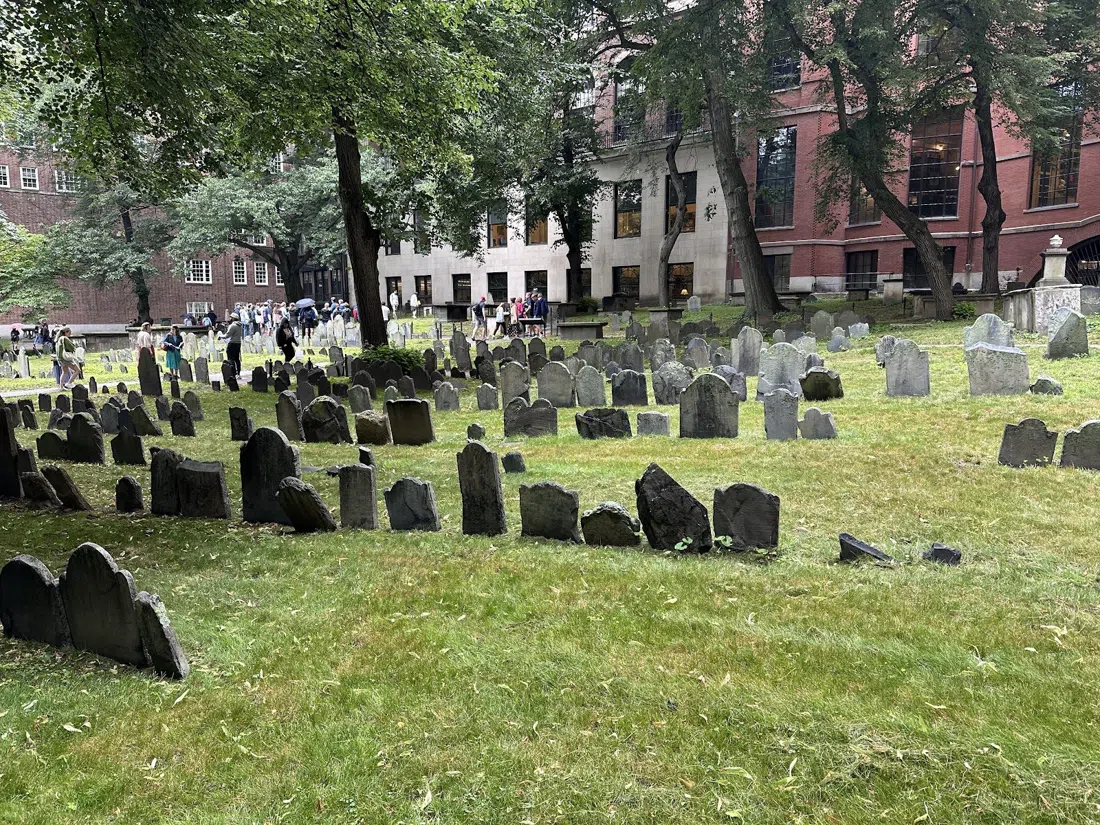
Back on the line, the sites come close together and the walking becomes incidental. The Granary Burying Ground in Downtown Crossing is free, open roughly 9am to 5pm and closing at dusk, and holds Paul Revere, John Hancock, Samuel Adams and the victims of the Boston Massacre inside one small yard. The paths between the stones are narrow. A couple can wander; a party of fifteen will simply block the central walk, so split up and meet at the gate.
King's Chapel and King's Chapel Burying Ground stands a block on in Downtown, still an active house of worship and therefore still subject to its own calendar. General admission is $5; the Bell and Bones tour, which takes you into the crypt and the galleries and up to the bell Revere cast, is $15 adult and $12 student or senior, free under six, and includes entry. Tours run roughly hourly and last forty-five to fifty-five minutes. The building opens Monday and Wednesday to Saturday, 10am to 4pm, and is shut Tuesdays and Sundays, so ring 617-227-2155 to confirm before bringing a group, because service schedules shift.
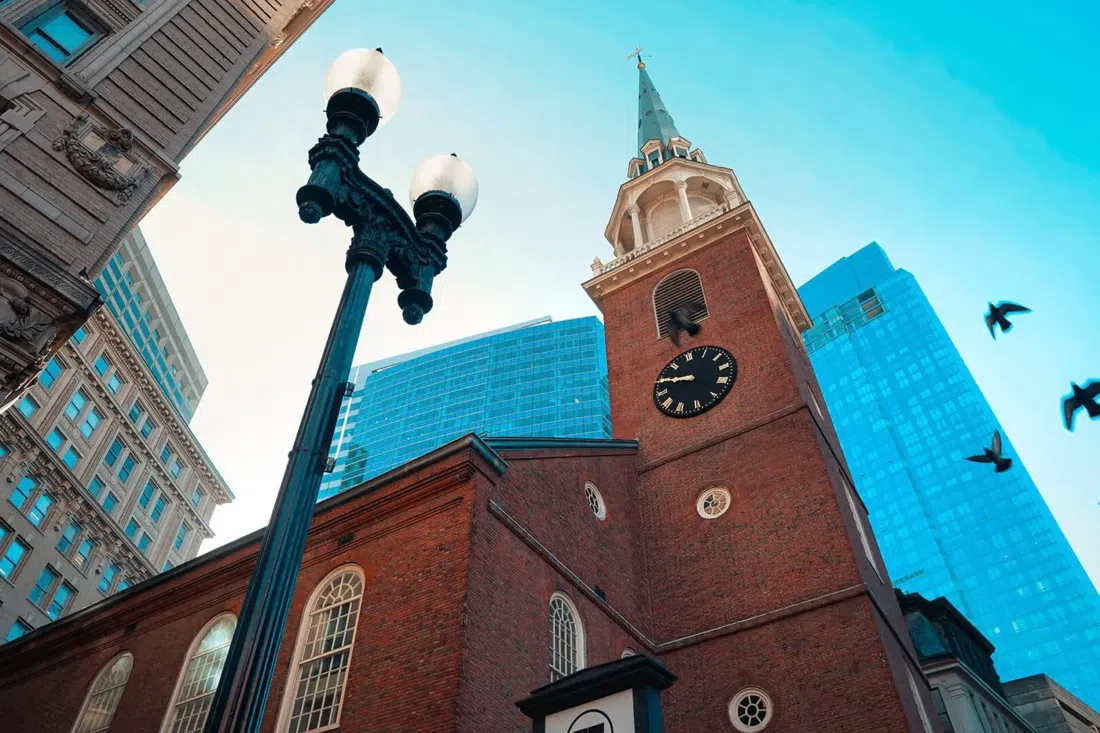
The Old South Meeting House in Downtown Crossing is the room where five thousand colonists argued themselves into throwing tea into the harbour, and the Old State House a few minutes further on in Downtown is the 1713 building from whose balcony the Declaration of Independence was first read aloud to the city, with the Massacre site marked on the pavement outside. Both open daily 10am to 5pm and share one ticket at $18 adult, $16 senior, $10 for youths aged six to seventeen and free under five, which makes paying for only one of them close to pointless. Organisations of ten or more should email [email protected] for group rates. The staircases in the Old State House are tight, so larger parties get staggered at the door rather than waved through together.
Where to stop for lunch without losing the thread
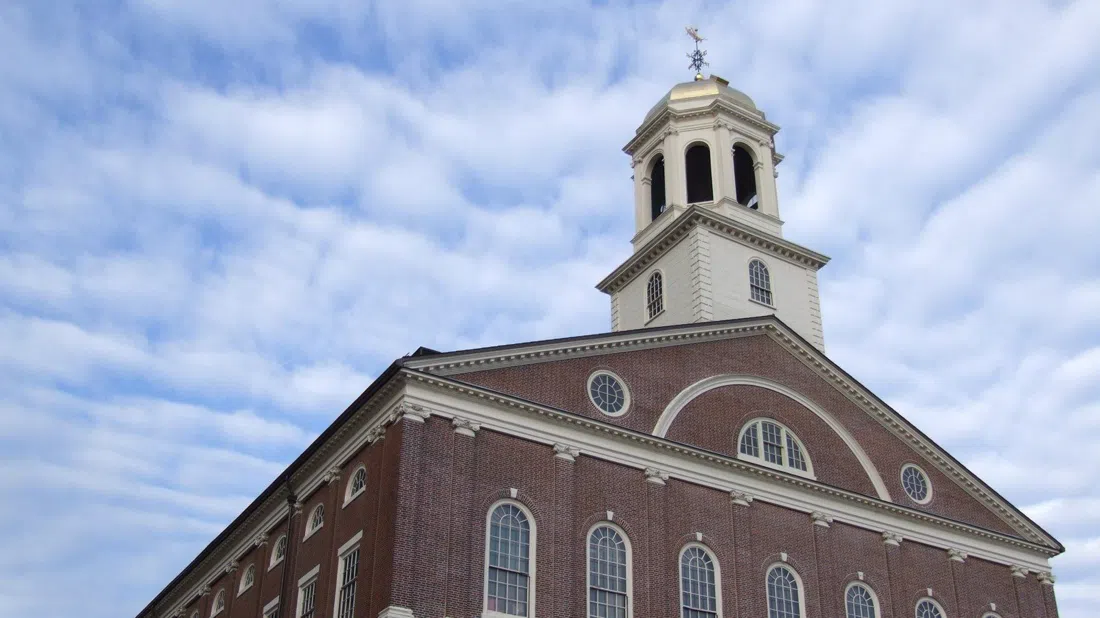
Faneuil Hall sits at the Downtown end of the market blocks, and the part worth your time is upstairs. The Great Hall is easy to miss entirely if you only shop the ground floor. National Park Service rangers give free talks Tuesday to Sunday on the half hour from 10:30am, and there is a historic town meeting Thursday to Sunday at 2pm. No registration, no booking, no ticket; a group just turns up a few minutes early for seats. Ranger hours are seasonal, so read the day's schedule at the door rather than assuming.
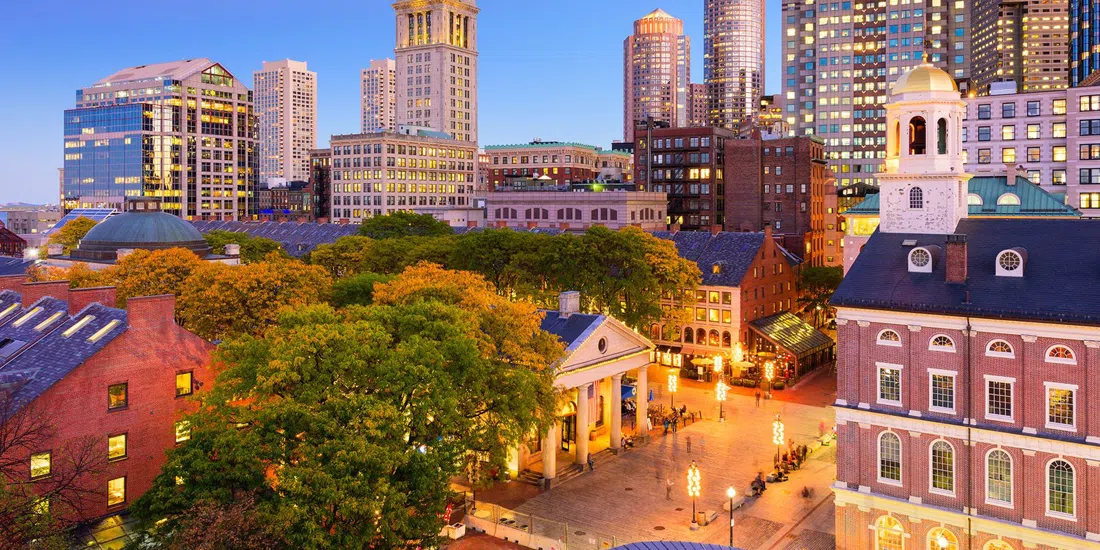
Next to it, Quincy Market in Downtown turned two hundred in 2026 and remains the pragmatic mid-trail refuel: chowder, lobster rolls, counter service throughout and lavatories in the same building, so you lose no walking time. Expect roughly $10 to $25 a head. There is no booking and no door policy, so it handles a large party better than any restaurant on the route will, but seating at midday is a scrum. Eat at 11:30am or at 2pm and the problem disappears.
Through the North End to the steeple
The trail crosses under the surface road and the character of the walk changes: narrow streets, laundry lines, bakery queues. The Paul Revere House in the North End is downtown Boston's oldest building and the cheapest paid interior on the trail at $6 adult, $5.50 senior or college student and $1 for children aged five to seventeen. Individuals buy at the door; groups of ten or more must reserve in advance. It is also tiny, low-ceilinged and effectively single-file, so it bottlenecks badly from late morning onward. Go before 10:30am or after 3pm. The neighbouring Pierce/Hichborn House is closed until further notice, so do not plan around it.

Mike's Pastry in the North End has been filling pastries to order since 1954 and is the standard pause between the Revere House and the church. It is counter service only, no bookings, and the queue reaches the pavement most afternoons. It opens daily 8am to 10pm, so a group is far better off going early or late than at 3pm. It is takeaway-first by design, so plan to eat on a bench in the square rather than at a table.

Old North Church and Historic Site, also North End, is where the signal lanterns were hung in the steeple, and the church leans into that story without overselling it. Opening is Monday to Saturday 10am to 5pm and Sunday 12:30pm to 5pm. The Discovery Pass is $10 adult and $5 youth; adding the bell chamber tour takes it to $15 and $10, and an after-hours crypt tour is $20. A $30 joint ticket also covers the Old State House and Old South Meeting House, which is worth doing the arithmetic on if you have not already paid downtown. Groups of fifteen or more book through the dedicated groups page or [email protected]. The bell chamber climb, into the room where a teenage Revere rang the bells, is the one upgrade on the trail that justifies the extra five dollars.
Charlestown, the ship and the 294 steps
The bridge over the Charles is the least interesting stretch of the walk and the point where a lot of people quietly give up. Push through it. The USS Constitution lies in the Charlestown Navy Yard, free to board, Tuesday to Sunday 10am to 6pm, first-come first-served with no group booking. She is the world's oldest commissioned warship still afloat and she is crewed by serving sailors, which is why everyone clears airport-style security individually and every visitor over eighteen must show federal or state photo identification, a passport if you are visiting from abroad. A large party should budget extra time for that alone. You also need to walk aboard unaided; wheelchairs, walkers and strollers stay on the pier.
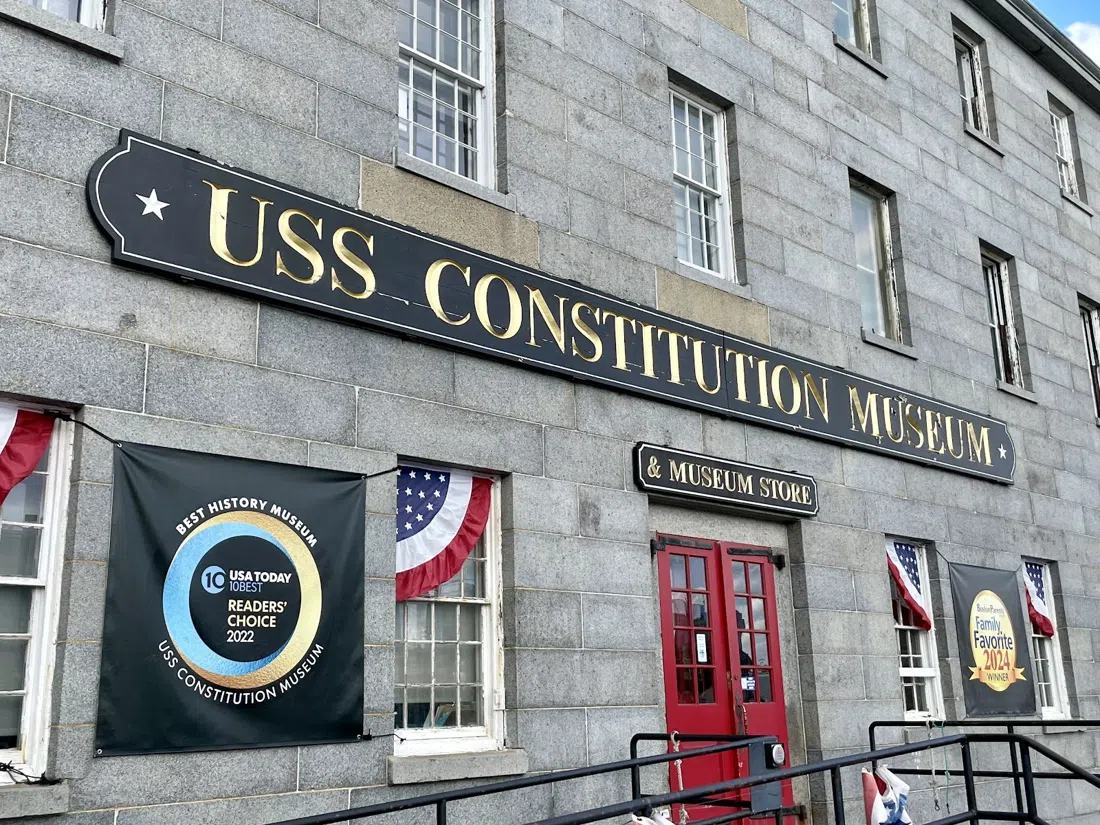
That last rule is why the USS Constitution Museum, a separate building in Charlestown, matters more than its name suggests. It opens daily 9am to 6pm, an hour earlier and an hour later than the ship, is fully wheelchair accessible on both floors, and runs on a suggested donation of anything from nothing to $25 a person. If anyone in your group cannot board, or if the weather has turned, this is where the Charlestown stop actually happens.

The Bunker Hill Monument and Bunker Hill Museum in Charlestown close the trail, and they are both its payoff and its sting. Monument and museum are free, open Wednesday to Sunday 10am to 5pm, with no booking. The obelisk holds twenty-five people at a time, so groups queue in waves, and the climb is 294 steps with no lift and no service animals permitted inside. It can also shut without warning in bad weather. Free ranger 'Decisive Day' talks run Wednesday to Sunday, hourly from 11am to 3pm, and the museum across the street gives you the battle without the stairs.
How long the walk really takes
The pavement itself is about an hour and a half at a steady pace, and nobody walks it that way. A realistic self-guided day with three or four paid interiors, a proper lunch and the Bunker Hill climb runs five to six hours. Two interiors and no climb is three hours. If you have a single morning, walk Boston Common to Faneuil Hall, which is most of the sites and almost none of the distance, and take the subway back.
The trail is busiest between 11am and 3pm, and the small interiors, the Revere House above all, are where that shows. Starting at 9am buys you the Beacon Hill end almost alone and puts you in the North End before the pastry queue forms.
Paying at the door or booking a guide
Everything on the trail can be done at the door. The joint downtown ticket, the Revere House, the church pass and the bell chamber are all walk-up purchases, and the free sites need nothing at all. The only reservations that genuinely matter are the timed slots at the Museum of African American History and any group of ten or more, which several sites require in advance.
A guided option exists and is attached separately to this page. What you are buying is sequencing and narrative rather than access. A guide gets you the causal thread between the massacre, the meeting house and the harbour, which the plaques do not supply. Prices start from 39 USD per person, tours run seven days a week, and there are 12,190 traveller reviews across the bookable tours here, with the top one rated 4.9 out of 5 from 7,909 reviews. If you are travelling with teenagers or with anyone who will not read an interpretive panel, a guide earns its money. If you read history for pleasure, you will do better with the free map and your own pace.
Access, rules and the things that will stop you
Four rules account for nearly every ruined plan. The State House is weekdays only. King's Chapel is shut Tuesdays and Sundays. The Bunker Hill Monument and the USS Constitution both close on Mondays, and the ship requires photo identification for adults. Read those four against your date before anything else.
On access: the pavement route is broadly walkable, but Beacon Hill is genuinely steep, much of the North End is brick and uneven, and the ship and the obelisk are both unusable for wheelchair or stroller users. The USS Constitution Museum and the Bunker Hill Museum are the accessible substitutes at the Charlestown end, and neither is a consolation prize.
Is walking the Freedom Trail worth it
Yes, with a caveat. Walked as a checklist of sixteen sites it becomes a forced march with admission fees. Walked as one city block after another where specific arguments were had by specific people, with three or four interiors chosen properly and a long lunch in the middle, it is among the more coherent days a visitor can have anywhere in the United States, because the distances are short, the buildings are real, and the story is continuous from the Common to the hill.
It suits couples and solo walkers best, since the small interiors reward moving at your own speed. Families do well as far as Quincy Market and then need a decision about the bridge. Groups over ten should accept that half the trail requires advance arrangement and book it a week out. If you want the wider city around it, the Boston guide covers what sits beyond the red line.
Best time to go in September 2026
September is the strongest month of the year for this walk, for the simple reason that you are on your feet outdoors for hours. The humidity of high summer has broken, the mornings are cool enough for a jacket you will take off by eleven, and the afternoons hold their light well past six, which matters because the Charlestown end of the trail has the longest opening hours and the fewest people in them.
The school-holiday crowds have gone by the second week, so mid-September onward is noticeably calmer inside the small houses. Aim for Tuesday to Friday, which is also the only window that opens the State House. Against that, early autumn on this coast brings the tail of the Atlantic storm season, and the Bunker Hill Monument closes without warning in weather, so keep the obelisk flexible and have the museum opposite as your fallback. Layers, a waterproof shell and shoes you have already broken in do more for the day than any ticket.
Practical notes for the day
Getting there and back is straightforward. Park Street station sits on the Common at the trailhead, and Community College or the ferry from the Navy Yard back to the downtown waterfront will save your legs at the Charlestown end. The ferry is the more pleasant of the two and gives you the skyline. Walking the whole thing one way and riding back is the sensible shape of the day.
Cards work everywhere on the route, including the museum donation boxes, but carry twenty dollars in small notes for pastries, the Revere House and anything with a counter. Total spend for two people doing the joint downtown ticket, Old North with the bell chamber, the Revere House and lunch lands around $110 to $130; doing only the free sites and eating at Quincy Market comes in under $50.
Start at 9am, be in the North End by one, cross the bridge by three, and stay central so the morning start is painless. The Boston hotel search covers the Downtown and Beacon Hill blocks within walking distance of the trailhead. Bring identification if the ship is on your list. And look down occasionally: the line is the only navigation you need.