 In this area
The Boston issue
Back Bay, Boston: brownstones, bookstores and rooftop views
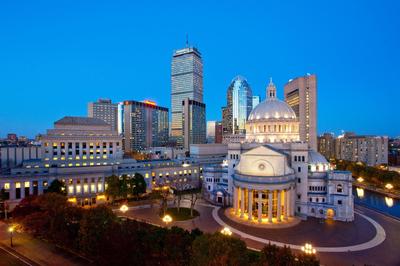
A walkable, polished Boston neighbourhood of Victorian rows, Copley Square landmarks, Newbury Street shopping and rooftop dining.
By Priya ChandrasekarNeighbourhood by neighbourhood, on foot
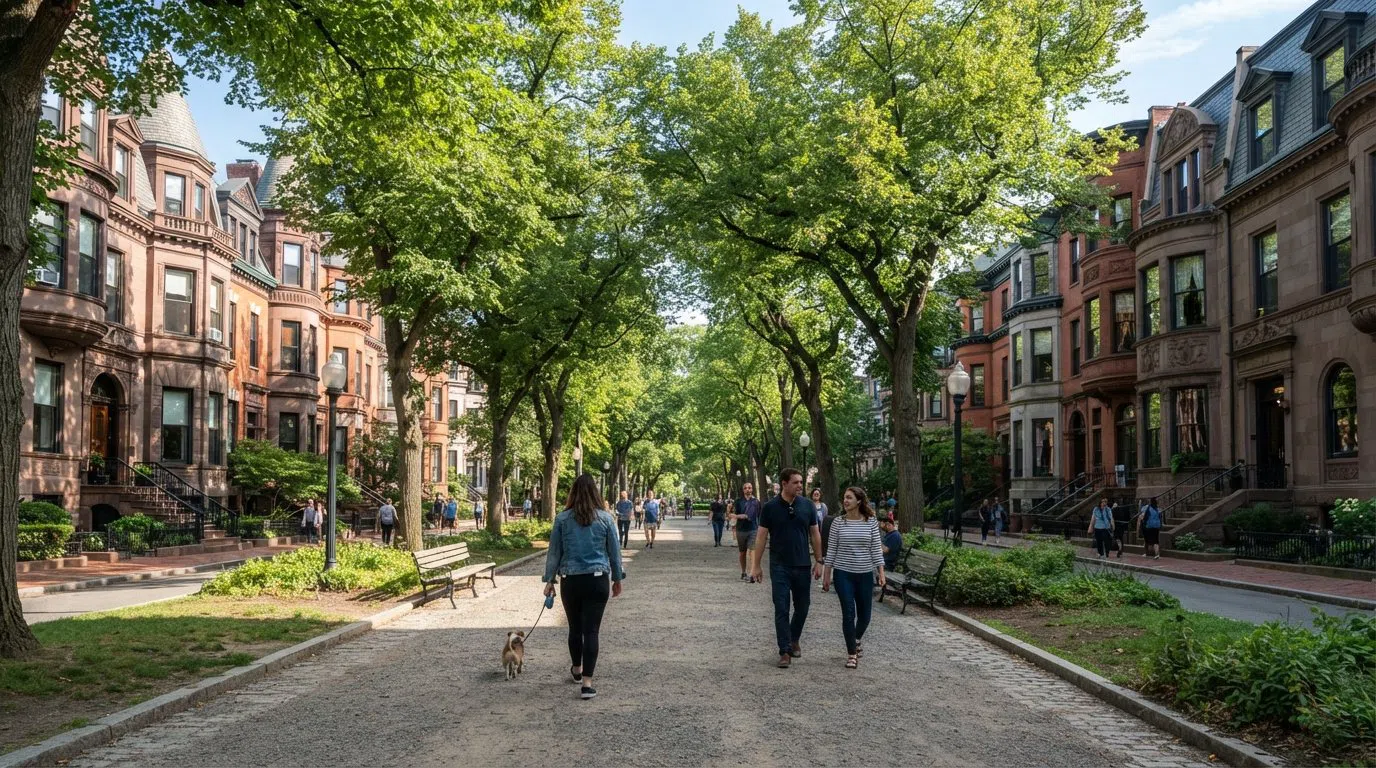
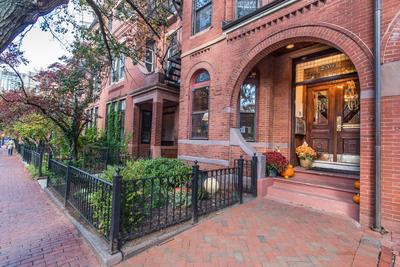
Back Bay begins with a rectangle of certainty: dead-straight streets on land Boston once had to make for itself. What was mud flat is now one of the city’s most orderly square miles, a French-style grid where the cross streets run alphabetically from Arlington to Hereford and the blocks stay flat enough that your pace settles without effort. On foot, the neighbourhood reveals itself in layers — brownstone facades, bay windows, wrought-iron stoops, the occasional glass tower lifting above all that masonry — and in the daily rhythm of people who seem to know exactly where they’re going.
What Back Bay is known for
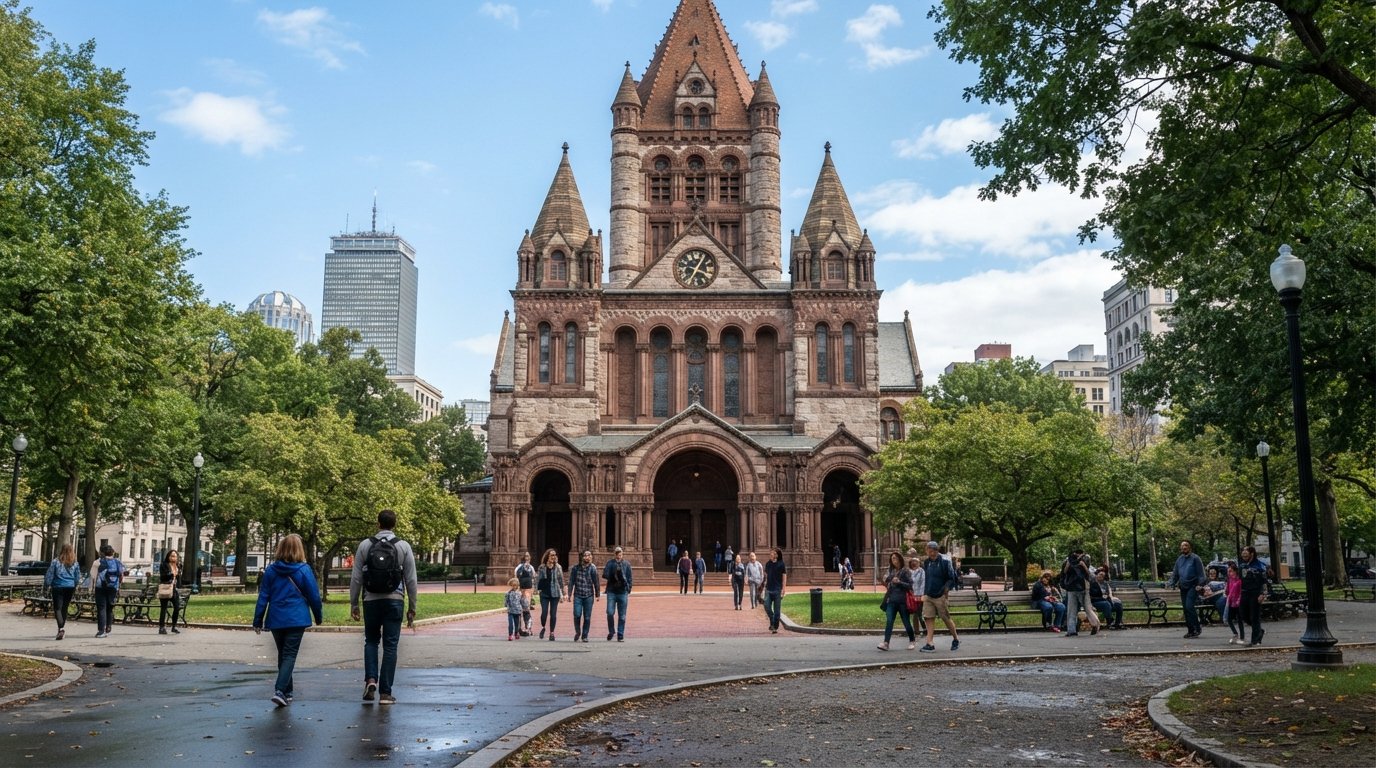
Back Bay’s centre of gravity is Copley Square, and it feels less like a plaza than a civic living room. Trinity Church stands on the western edge in H. H. Richardson’s rough-hewn stone, all heavy arches and a 211-foot tower that still looks improbably rooted in the old bay mud below. Across Dartmouth Street, the Boston Public Library gives the square its other great wall: McKim’s 1895 building, the first free municipal library in the United States, with 537 carved names on the facade and a reading room that can hush a person before they’ve even found a seat.
This is the neighbourhood’s language: a formal one, but never rigid. The Boston Public Library’s Bates Hall is the room to remember — 218 feet long, with a 50-foot barrel-vaulted ceiling — and the arcaded Italianate courtyard offers the kind of pause that feels built into the city’s pace. Upstairs, the Sargent murals are part of the same civic calm. Step back outside and the square opens again to the daily business of Back Bay: the farmers’ market on Tuesdays and Fridays from late spring through November, the Boston Marathon finish line each April, the Green Line surfacing at Copley with that small metallic exhale that belongs to Boston mornings.
A little farther west, the neighbourhood turns green in a different register. Commonwealth Avenue Mall runs down the centre of the boulevard like a stitched seam, a statue-lined promenade that keeps the avenue from becoming merely grand. It is one of the pleasures of Back Bay to walk that spine and watch the city shift from formal to lived-in without ever losing its polish. At the eastern end, the Public Garden waits as the soft edge of the neighbourhood; overhead, the Prudential Tower now holds View Boston, the three-floor observatory that opened in 2023 and gives the district a new vertical punctuation mark.
Plan your Boston trip
Live prices from our booking partners.
Guests & rooms
Free cancellation on many rooms. We may earn a commission when you book.
Where to eat & drink
Back Bay eats with confidence. At the serious end of the spectrum, Grill 23 & Bar has been the benchmark steakhouse since 1983, a clubby room at 161 Berkeley Street where dry-aged cuts and an award-winning wine program do the heavy lifting. Abe & Louie’s on Boylston carries a similar charge but with a slightly more Boylston swagger — tomahawks, ribeye cap and martinis served with a personal ice bucket, as if the room itself understood the assignment.
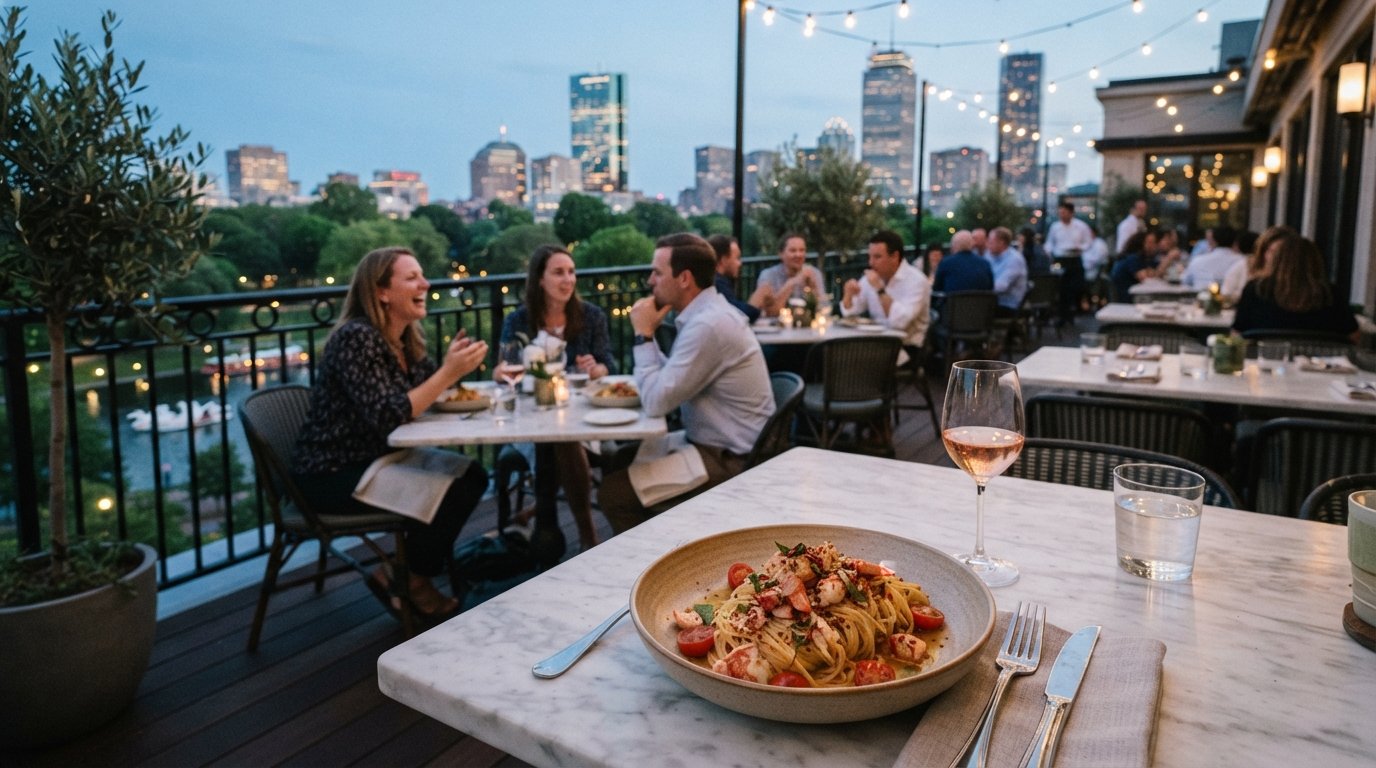
For dinner with a view that actually earns the name, Contessa sits atop The Newbury at 3 Newbury Street, a rooftop Northern Italian room from Major Food Group where the spicy lobster capellini seems to have become part of the local script. The terrace looks straight out over the Public Garden, and the room has the polished theatricality that Back Bay does so well.
But Back Bay is not only about spectacle. Krasi at 48 Gloucester Street has become one of the neighbourhood’s most distinctive tables, a Greek meze-and-wine bar where tzatziki is mixed tableside and the wine list — the largest Greek list in the country — gives the room its own kind of authority. Select Oyster Bar, just down Gloucester, is smaller and sharper-edged, with a daily ceviche and a funky back patio that feels like a secret tucked into the grid. Saltie Girl on Dartmouth leans into the city’s seafood appetite with lobster frites and a deep tinned-seafood selection, while Atlantic Fish Company on Boylston remains the dependable classic for lobster ravioli and cioppino.
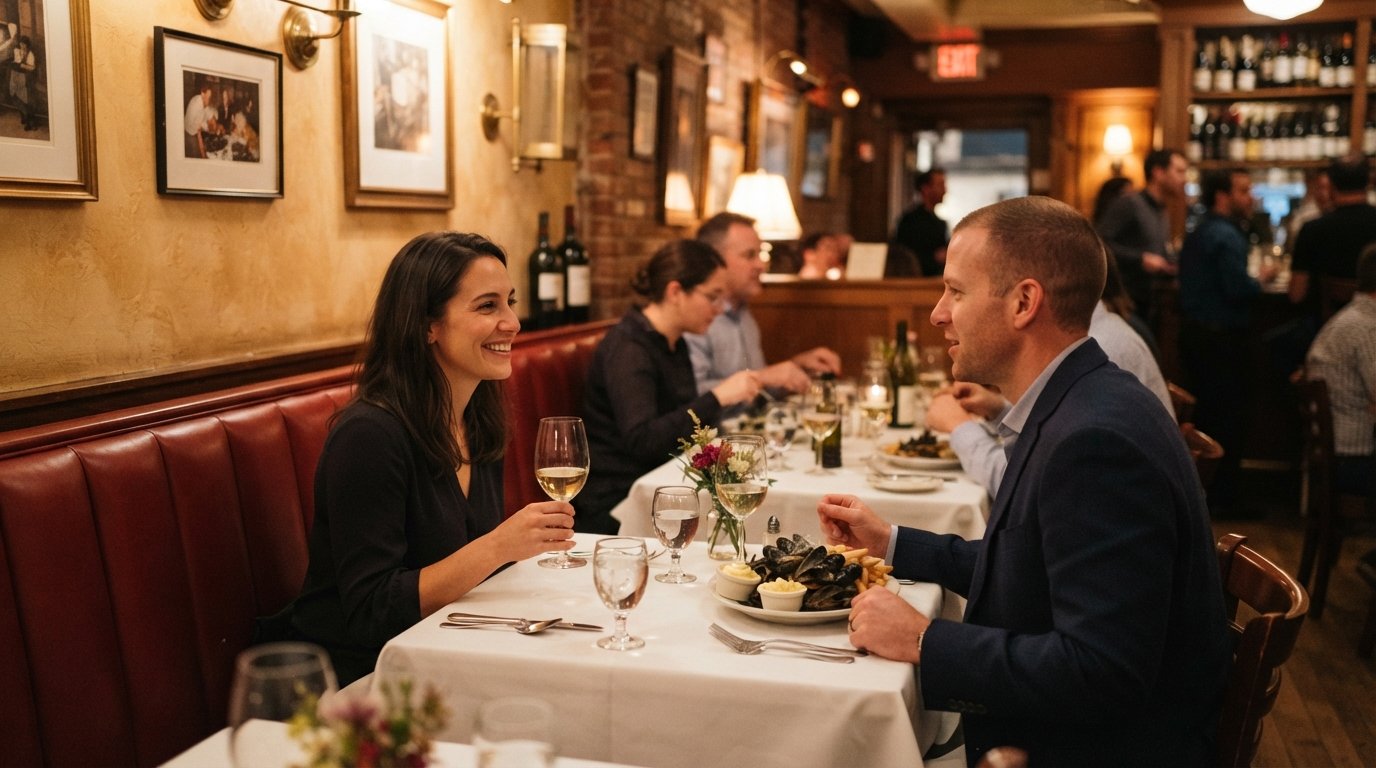
Newbury Street supplies the rest of the day’s appetite, and it does so with a pleasing range. La Voile at 261 Newbury is all red banquettes, white tablecloths and moules frites, a French bistro that holds its own against the street’s flashier neighbours. Faccia a Faccia at 278 Newbury keeps things contemporary and Italian, with Sicilian crudo and seasonal pastas. Sonsie, meanwhile, is the place for patio people-watching when the weather cooperates, which in Back Bay often means the whole street seems to step outside at once. If lunch needs to be quick but not forgettable, Parish Café at 361 Boylston builds sandwiches designed by the city’s own chefs. And when the appetite turns more casual than ceremonial, Eataly inside the Prudential Center gives the neighbourhood a three-floor Italian reset — counters, restaurants, a mozzarella lab, and the sort of place you can drift through without having made a plan.
Going out
Back Bay’s nights are polished rather than raucous, which is part of the appeal. The neighbourhood does not really do the late-club sprawl; it prefers rooftops, hotel bars and cocktail rooms that know how to hold a conversation. Contessa’s rooftop is still the signature perch, especially when the city softens into evening and the Public Garden below begins to darken around the edges.
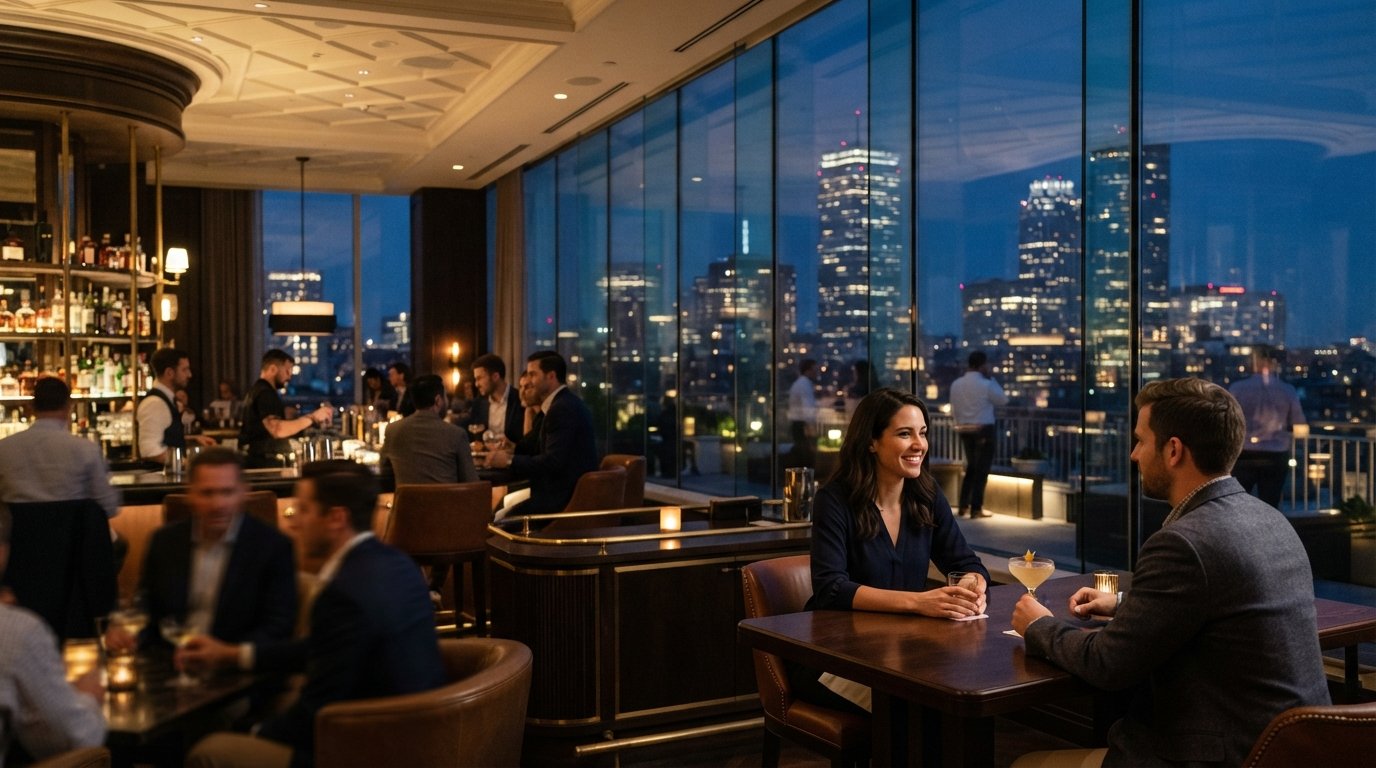
Raffles Boston brought two headline rooms to Stuart Street and immediately changed the skyline conversation. Long Bar & Terrace sits on the 17th floor and claims the invention of the Singapore Sling, while the hidden Blind Duck offers a two-storey speakeasy with floor-to-ceiling skyline windows. Both feel very of-the-moment, but not in a way that breaks Back Bay’s composure. The same could be said for OAK Long Bar + Kitchen inside the Fairmont Copley Plaza, where the Bee’s Knees comes with gin infused from the hotel’s own rooftop-hive honey. The drink is the sort of detail that makes a hotel bar feel rooted in its address rather than borrowed from elsewhere.
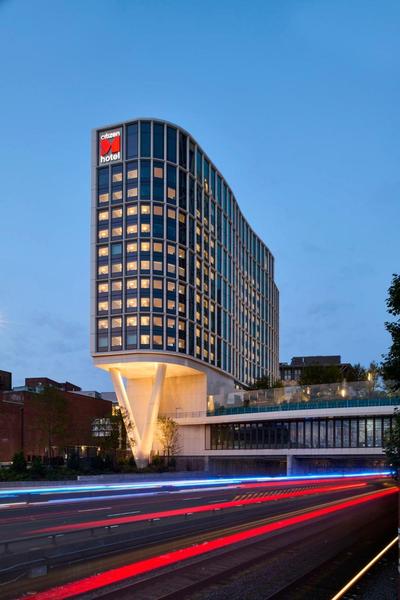
At One Dalton, Zuma brings a stylish Japanese izakaya bar to the Four Seasons tower, with robata skewers and sushi giving the room a more modern pulse. And then there is Bubble Bath, Tiffani Faison’s caviar-and-Champagne rooftop atop the CitizenM hotel, opened in 2025 fifteen floors up, where uninterrupted skyline views and a mushroom-soju Kokumi suggest Back Bay’s appetite for glamour is still evolving. For a different register entirely, Bukowski Tavern on Dalton Street offers the necessary counterweight: craft beer, greasy burgers, and a room that reminds you that polished neighbourhoods still need somewhere unbuttoned to land. Most of these nights, in one way or another, wrap up by around 1am.
Things to do / what to see
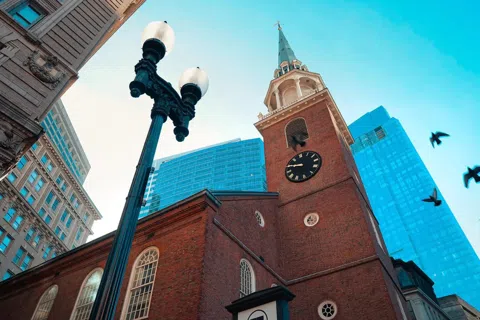
The best way to understand Back Bay is to start on foot and keep the route simple. Copley Square gives you three of Boston’s landmark buildings in one sweep: Trinity Church, the Boston Public Library and Old South Church, whose Northern Italian Gothic bulk adds a third architectural accent to the square. Trinity charges a small admission for the sanctuary and self-guided tours; the library is free, and the pleasure of entering it is partly in how quickly the city noise falls away.
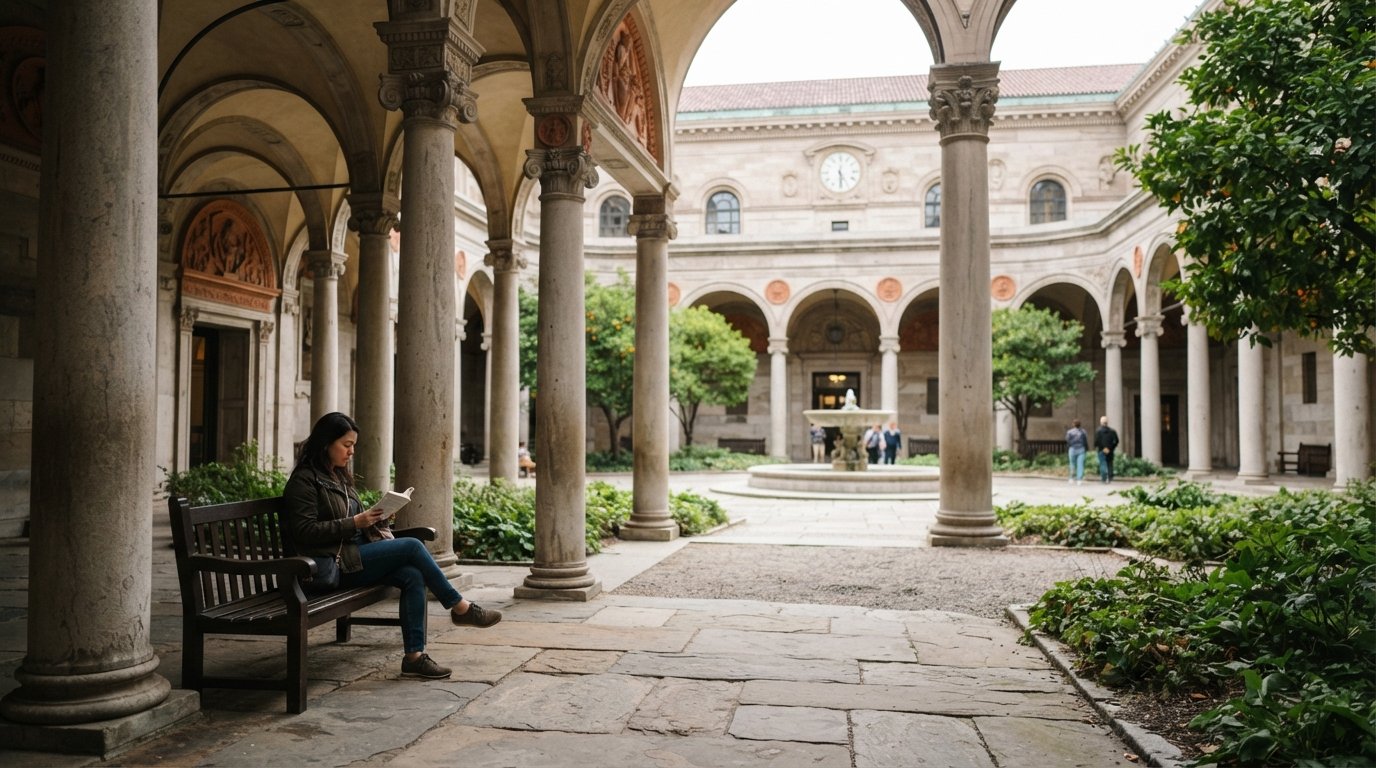
Inside the Boston Public Library, Bates Hall remains one of the great civic rooms in the country, and the Sargent Gallery murals and Italianate courtyard make the building feel less like an institution than a sequence of carefully calibrated pauses. That is the trick of Back Bay: it gives you landmarks, but it also gives you places to sit between them. The courtyard, in particular, is the kind of quiet that rewards an unhurried afternoon, coffee in hand, shoes still dusted from the street.
From there, the scale of the neighbourhood opens out. Ride up the Prudential Tower to View Boston, the observatory across the tower’s top three floors, with its open-air roof deck on the 51st. The view makes Back Bay legible in a single sweep: the square grid, the Charles, the Public Garden, the way the city’s older forms sit comfortably beside its newer glass. Then come back down to street level and walk the Commonwealth Avenue Mall, where the tree-lined promenade runs past bronzes of figures from William Lloyd Garrison to the Boston Women’s Memorial, all the way to the Public Garden at the eastern foot.
When the weather turns warm, cross the Storrow Drive footbridges to the Charles River Esplanade, the riverside park that runs the length of Back Bay. The Hatch Memorial Shell, built in 1941, hosts free summer concerts, and Community Boating — founded in 1937 and the oldest public sailing organisation in the United States — rents kayaks and sailboats from May to October. That stretch by the river is where Back Bay loosens its collar a little, though never enough to lose its shape.
Don’t miss in Back Bay
Newbury Street, eight blocks of high-end boutiques, galleries, and sidewalk cafes.
The Commonwealth Avenue Mall, a grand pedestrian parkway designed in the French style.
The Boston Public Library, featuring a magnificent central courtyard.
Shopping
Back Bay is Boston’s shopping neighbourhood, and it works by gradient. Newbury Street is the obvious spine: eight blocks of 19th-century brownstones turned storefronts, with the eastern end — closer to Arlington and the Public Garden — tilting toward the luxury names. Chanel, Cartier, Gucci, Loro Piana and Alan Bilzerian all belong to that part of the street, where the windows are as carefully edited as the clientele.
Walk west and the mood loosens. Reformation, Uniqlo, Zara, Urban Outfitters and Muji bring the street back toward the everyday, while salons and café patios keep the sidewalk active. Trident Booksellers & Cafe, near the western end, is one of the neighbourhood’s most useful anchors: an independent bookshop-café with all-day breakfast and author events, the sort of place that reminds you shopping streets can still leave room for reading.
If the weather turns, the indoor options are not an afterthought. Copley Place is the upscale mall anchored by Neiman Marcus and lined with Louis Vuitton, Hermès, Dior and Tiffany & Co. The Prudential Center, connected by an enclosed skybridge, adds 70-plus shops and Eataly at the base of the tower. Between them, the two complexes make Back Bay feel less like a single shopping street than a whole retail district, one that can absorb a rainy afternoon without losing its composure. On Tuesdays and Fridays from late spring through November, the Copley Square Farmers’ Market adds a more local note to the mix.
Where to stay in Back Bay
Back Bay is the classic upscale base for a Boston trip because it solves so many practical problems at once. It is central, flat, walkable and dense with hotels, which is another way of saying the neighbourhood has been built for people who want to step out and keep moving. The trade-off is price: this is not a budget district, and it never pretends to be.
The plushest addresses cluster near the Public Garden and Copley Square. The Newbury Boston sits at Newbury and Arlington with the garden as its front yard and Contessa on the roof; the Fairmont Copley Plaza has held its landmark spot on the square since 1912; and the Mandarin Oriental on Boylston is wired into the Prudential shopping complex. Raffles Boston, on Stuart Street, is the newest luxury tower, while The Eliot near Massachusetts Avenue offers a smaller all-suite classic beside Uni. For mid-range value with the same walkability, The Colonnade on Huntington is a reliable base near Copley and the symphony.
As a rule, the eastern end of Back Bay — Arlington to Berkeley, by the Public Garden — is the quietest and most storied. The Boylston and Prudential side puts shopping, the observatory and transit under your feet. Either way, the neighbourhood rewards the same habit: leave the hotel on foot and let the grid do the work.
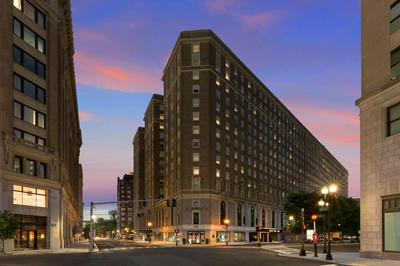
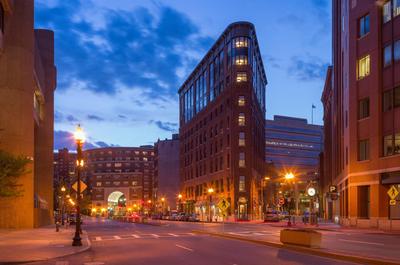
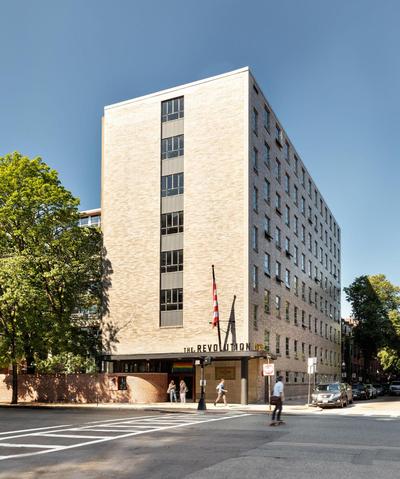
Hotels in Back Bay
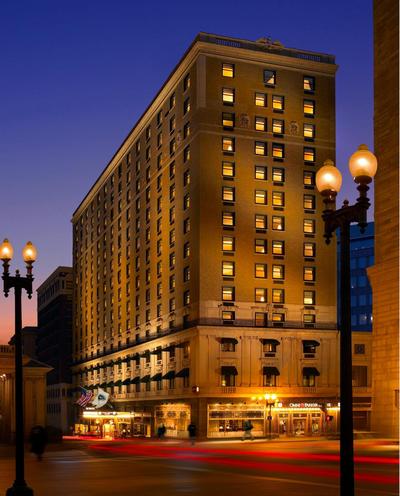
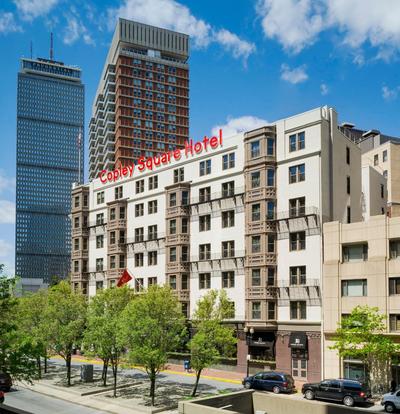
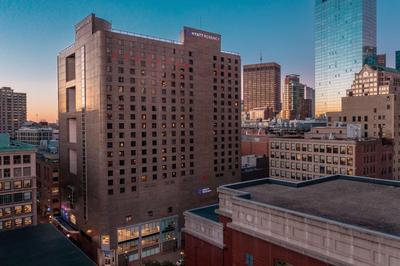
Our best-rated stays in this neighbourhood. Prices are approximate “from” rates — confirmed at the provider when you continue. We may earn a commission if you book through our partners — at no extra cost to you.
In this area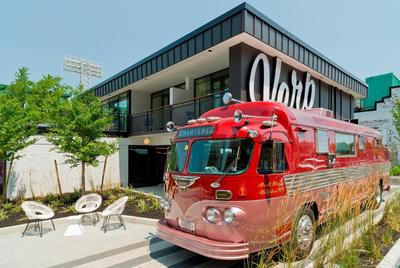 In this area
 In this area
 In this area
 In this area
 In this area
 In this area
 In this area
 In this area
 In this area
Back Bay
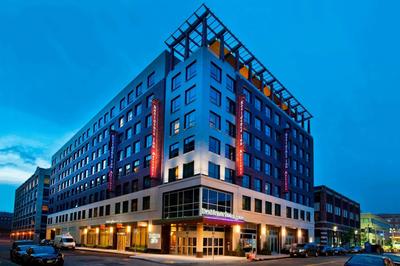
Residence Inn by Marriott Boston Back Bay/Fenway
9.2· 910 reviews
approx. from£902 / nightSee prices
 In this area
 In this area
Getting around
Back Bay is built for walking. You can cross it end to end in under 30 minutes, and the grid is so clear that getting lost takes effort. The Green Line runs beneath Boylston Street with stops at Arlington, Copley and Hynes Convention Center, feeding you downtown to Park Street or out toward Kenmore and Fenway in minutes. Three blocks south on Dartmouth Street, Back Bay station is the bigger hub, with the Orange Line, four Commuter Rail lines and Amtrak’s Northeast Corridor, including the Acela.
That makes arrival unusually easy. From Logan Airport, it is roughly 20–30 minutes by taxi or rideshare, or you can take the Silver Line bus from the terminals to South Station and connect one stop on the Orange Line to Back Bay. Downtown, Beacon Hill and the North End are all a short walk or one Green Line ride away. In a city that can feel compressed and vertical elsewhere, Back Bay is the place where Boston opens itself into a plane you can read at street level.
Gallery
Back Bay in pictures
Back Bay — your questions
Is Back Bay a good area to stay in Boston?
Yes — it’s the classic first-timer base. You’re central, flat and walkable, close to Copley Square, Newbury Street, the Public Garden and the Green Line, with the city’s biggest concentration of good hotels. The trade-off is price, since Back Bay skews expensive and has few budget beds.
Is Back Bay safe?
Back Bay is one of Boston’s safest and most walkable neighbourhoods, busy and well lit day and night. Use normal city awareness after dark near Massachusetts Avenue and around the transit stations, but there’s no area you’d need to avoid.
What is Back Bay best known for?
Its Victorian brownstone grid, Newbury Street shopping and Copley Square — home to Trinity Church and the Boston Public Library. It’s also where the Boston Marathon finishes and where you’ll find View Boston and the Charles River Esplanade.
How do you get around Back Bay?
Mostly on foot. The Green Line serves Arlington, Copley and Hynes on Boylston, while Back Bay station brings the Orange Line, commuter rail and Amtrak. The neighbourhood is flat enough to cross end to end in under 30 minutes.