 In this area
The Boston issue
Beacon Hill, Boston: brick, lamps and the slow life of Charles Street
A walkable pocket of Boston where Federal rowhouses, Black history, antique shops and low-lit dining still shape the day-to-day rhythm.

By Priya ChandrasekarNeighbourhood by neighbourhood, on foot
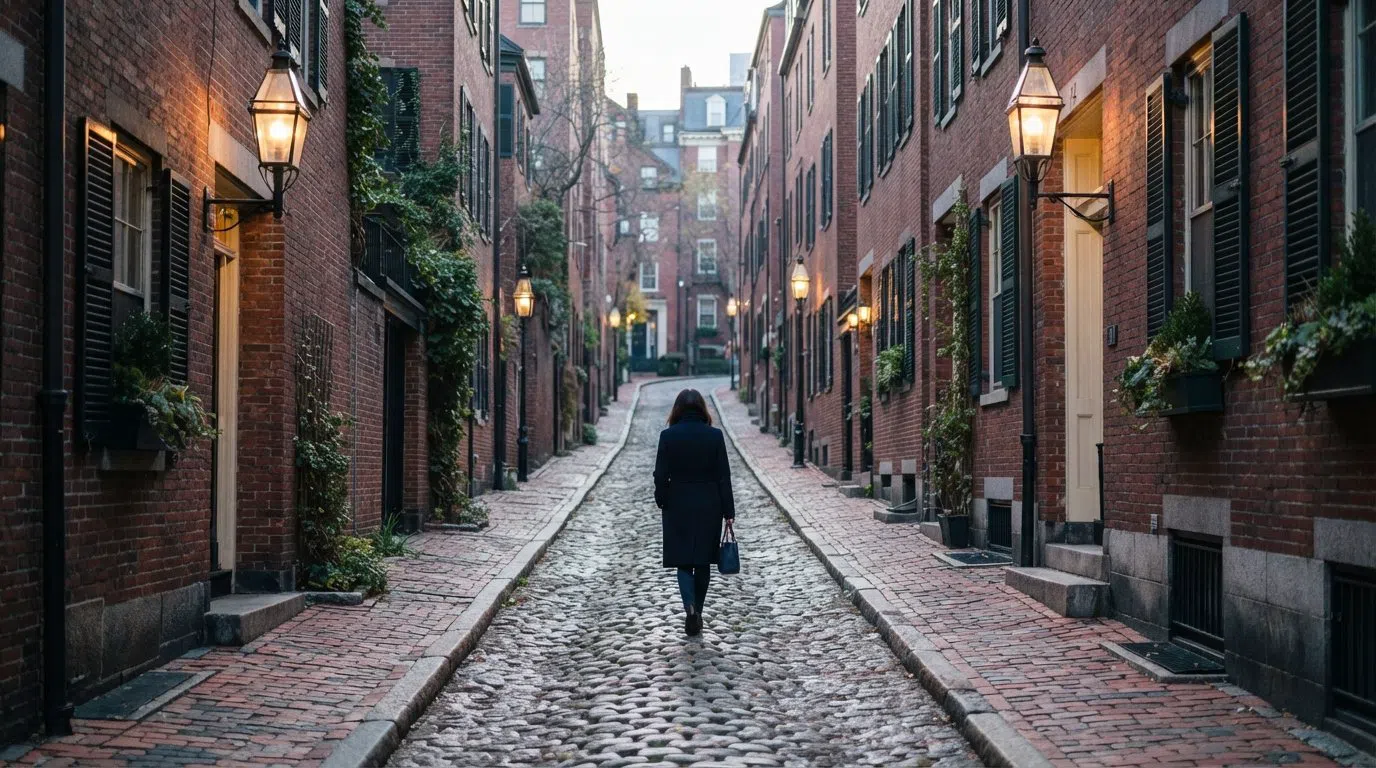
Beacon Hill announces itself before you really enter it: the gilded dome of the Massachusetts State House catching light above Boston Common, Charles Street flattening out below like a calmer, older version of the city, and the brick sidewalks already asking you to slow down. On a good day the neighbourhood feels less like a district than a set of carefully linked scenes — a croissant at Tatte, a pause under a gas lamp, a glance into a bowfront window, a pub booth where somebody has been sitting since the 1930s. It is compact enough to read on foot, but layered enough that the first pass only gives you the outline.
What Beacon Hill is known for
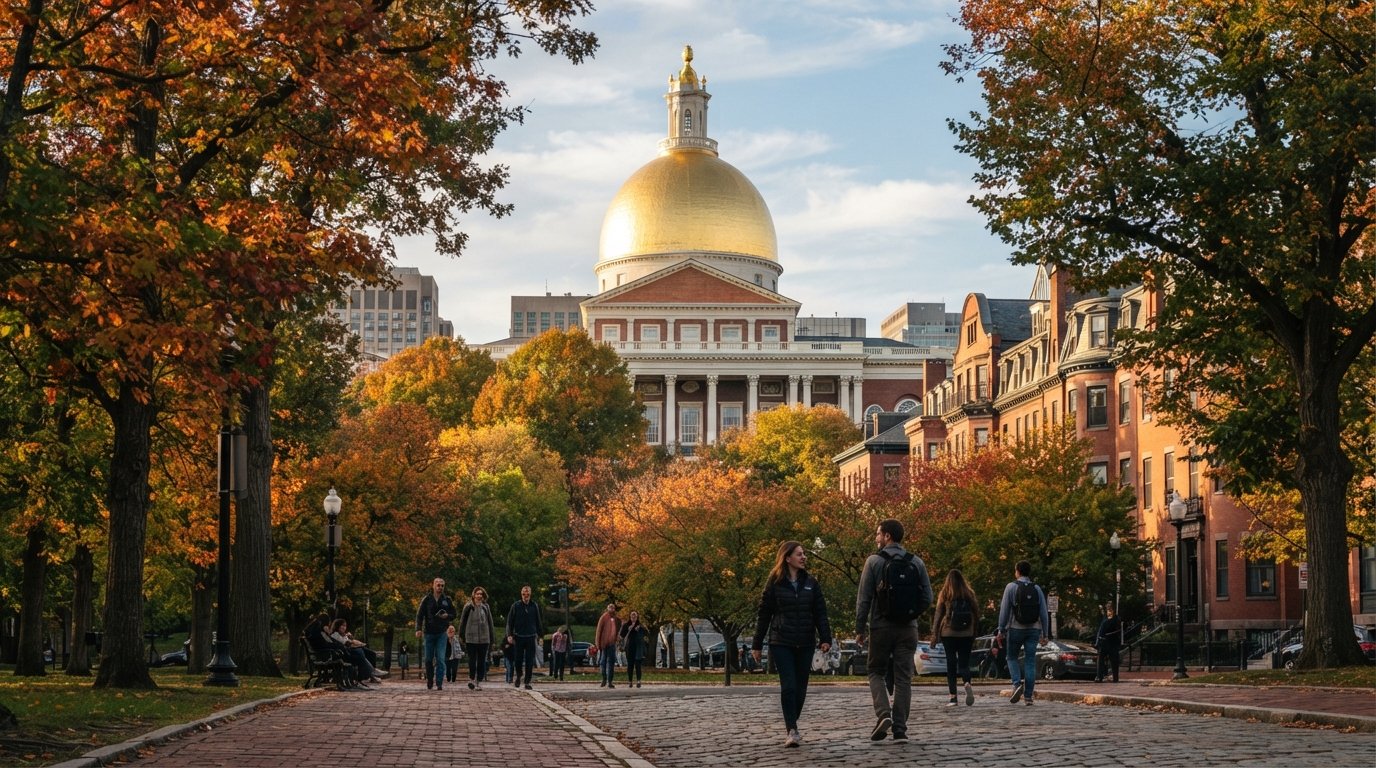
The Hill’s reputation rests on two things that are easy to name and harder to exhaust: the skyline anchor at the crest and the streets themselves. Charles Bulfinch’s Massachusetts State House, completed in 1798, sits above it all with a gilded dome that seems to gather the day’s weather into one bright point. Free weekday tours take you into the House and Senate chambers, but even if you never go inside, the building does most of its work from the outside, holding the neighbourhood in place the way a compass needle holds north.
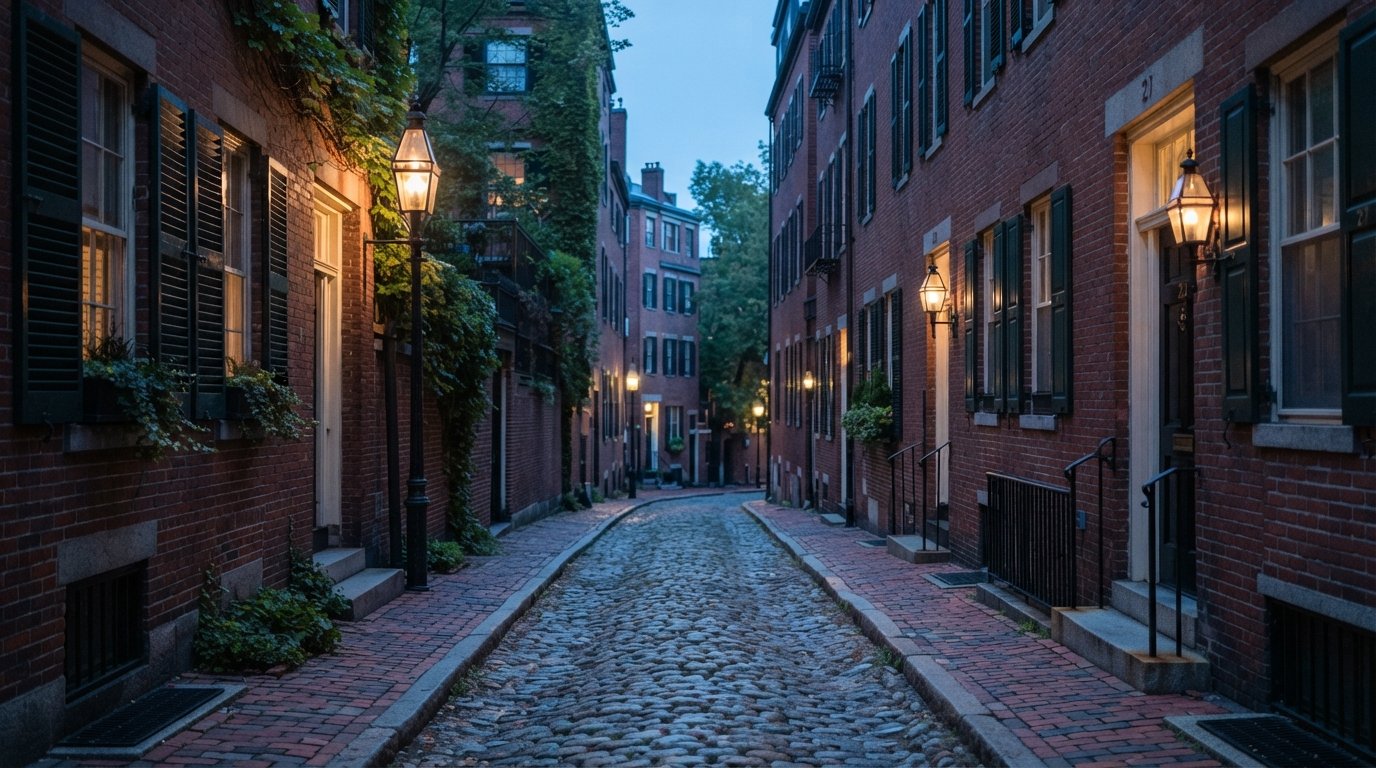
Below that crest, Beacon Hill becomes a warren of Federal rowhouses that survived almost intact, which is why film crews keep coming back when they need the 19th century without the trouble of building it. The streets are narrow, the brick sidewalks buckle over old tree roots, and the whole place seems calibrated for a slower pace than the city around it. Acorn Street is the best-known example, a one-lane cobblestone alley of former servants’ quarters that gets called the most photographed street in the United States for good reason. Go early or late, because by mid-morning the queue of people with cameras can feel like its own temporary neighbourhood.
Louisburg Square is the other postcard, though it is a more restrained one. The private garden square is Boston’s benchmark for old money, with Louisa May Alcott once among its residents and Senator John Kerry still living there now. You can see the garden from the public sidewalk, but not enter it unless you belong to the square, which feels entirely in keeping with Beacon Hill’s habit of offering just enough and no more. The south slope, especially below Pinckney Street, is where the classic view gathers: Chestnut and Mount Vernon lined with bowfront townhouses, purple-tinted antique window glass, and window-box geraniums that seem to have been chosen by the neighbourhood itself.
The Hill’s other story sits on the north slope, and it deepens the place considerably. This was home to a thriving free Black community from the late 1700s, and the streets still carry that history in a way that rewards anyone willing to walk with attention. Beacon Hill is not only about preservation in the decorative sense; it is also about memory, survival and the building of institutions that mattered. That is part of why the neighbourhood feels so complete. It is not a museum district frozen in amber. It is a lived-in place with a long civic argument behind it.
Plan your Boston trip
Live prices from our booking partners.
Guests & rooms
Free cancellation on many rooms. We may earn a commission when you book.
Where to eat & drink
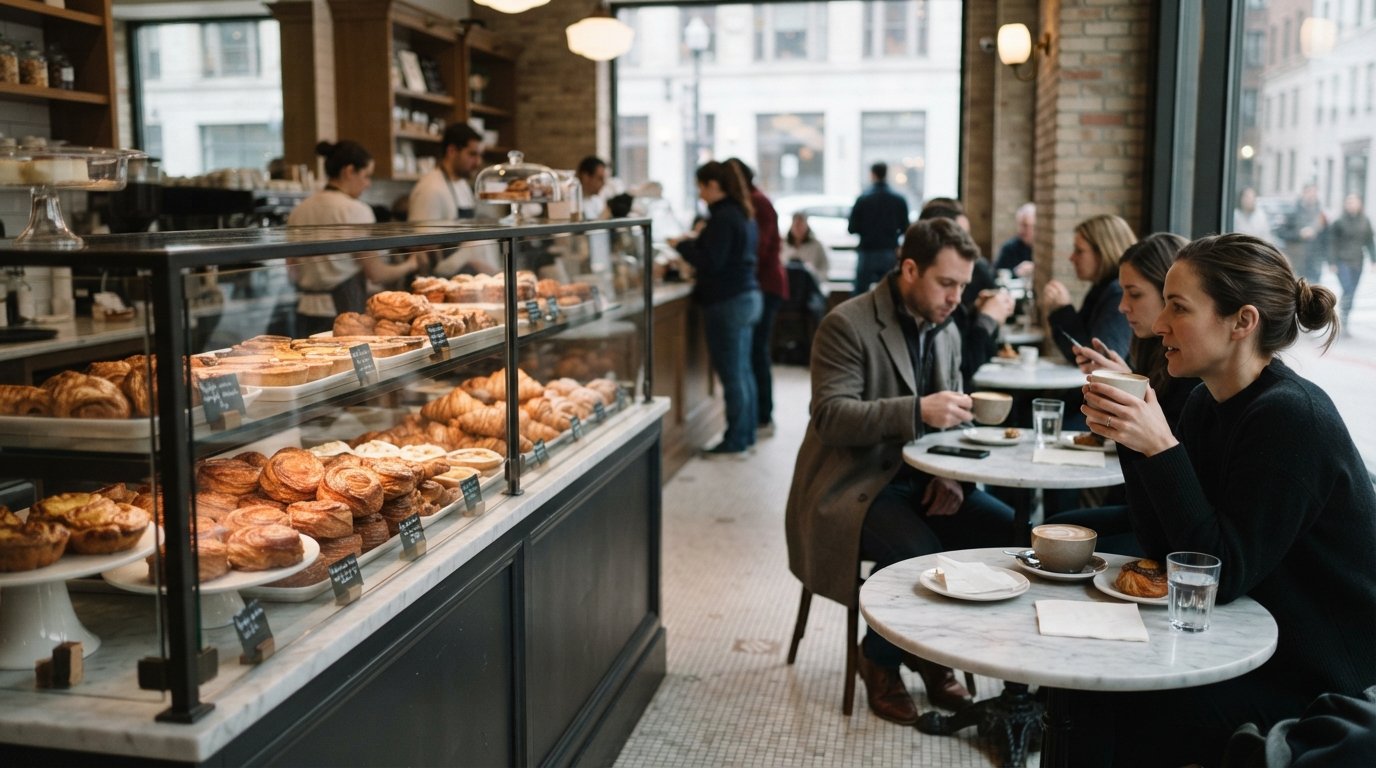
Charles Street is the spine of the Hill’s daily life, and the food and drink here follow that same unhurried rhythm. Tatte Bakery & Café at 70 Charles is the daytime living room, all marble tables and towering pastry cases, the sort of place where Beacon Hill residents actually start the day rather than merely passing through it. Shakshuka, kouign-amann and breakfast sandwiches do the practical work; the room does the social one.
The Paramount at 44 Charles is a different kind of institution, one of those places that makes a neighbourhood feel inhabited rather than curated. By day it runs cafeteria-style, with griddled banana french toast and steak and eggs; by night it becomes full service, and the room keeps the same easy confidence. Toscano at 47 Charles has been holding down old-school Tuscan cooking for four decades, which in Beacon Hill time is almost a civic achievement. Cornish hen off the charcoal grill and a four-cheese tasting with truffle honey are the kind of dishes that explain why regulars keep their tables.
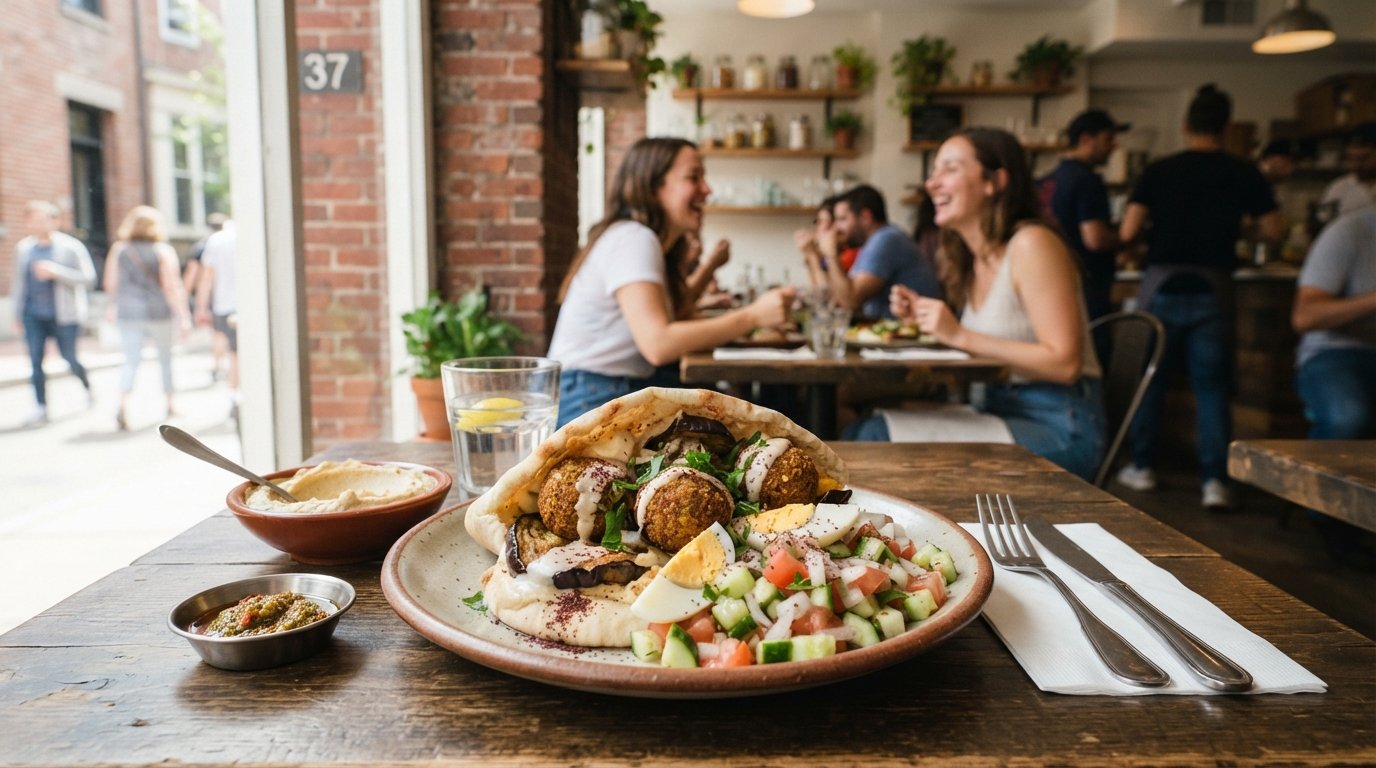
For a bigger occasion, Scampo in the former Charles Street Jail, now The Liberty Hotel, is Lydia Shire’s Italian-Mediterranean showcase, with breads baked in a tandoor oven and a mozzarella bar that feels just theatrical enough for the setting. Mooo beside XV Beacon at 15 Beacon is the textbook steakhouse answer to Beacon Hill’s polished side, with Uruguayan rib-eyes, A5 Wagyu and an award-winning wine list. Peregrine, on the lobby level of The Whitney at 170 Charles, leans coastal-Mediterranean and has a garden patio that suits a slow weekend brunch. For something lighter and easier on the wallet, The Hummus Shop at 37 Charles does a genuinely good sabich and falafel, while Zurito at 26 Charles pours cheap tempranillo under jamón legs hanging over the bar.
The best meals here rarely feel hurried. Even the more formal places keep a residential tone, as if the neighbourhood were insisting that dinner should still be part of the day’s walk. That is the appeal of Beacon Hill dining: it is not trying to reinvent the city, only to sustain a particular way of being in it.
Going out
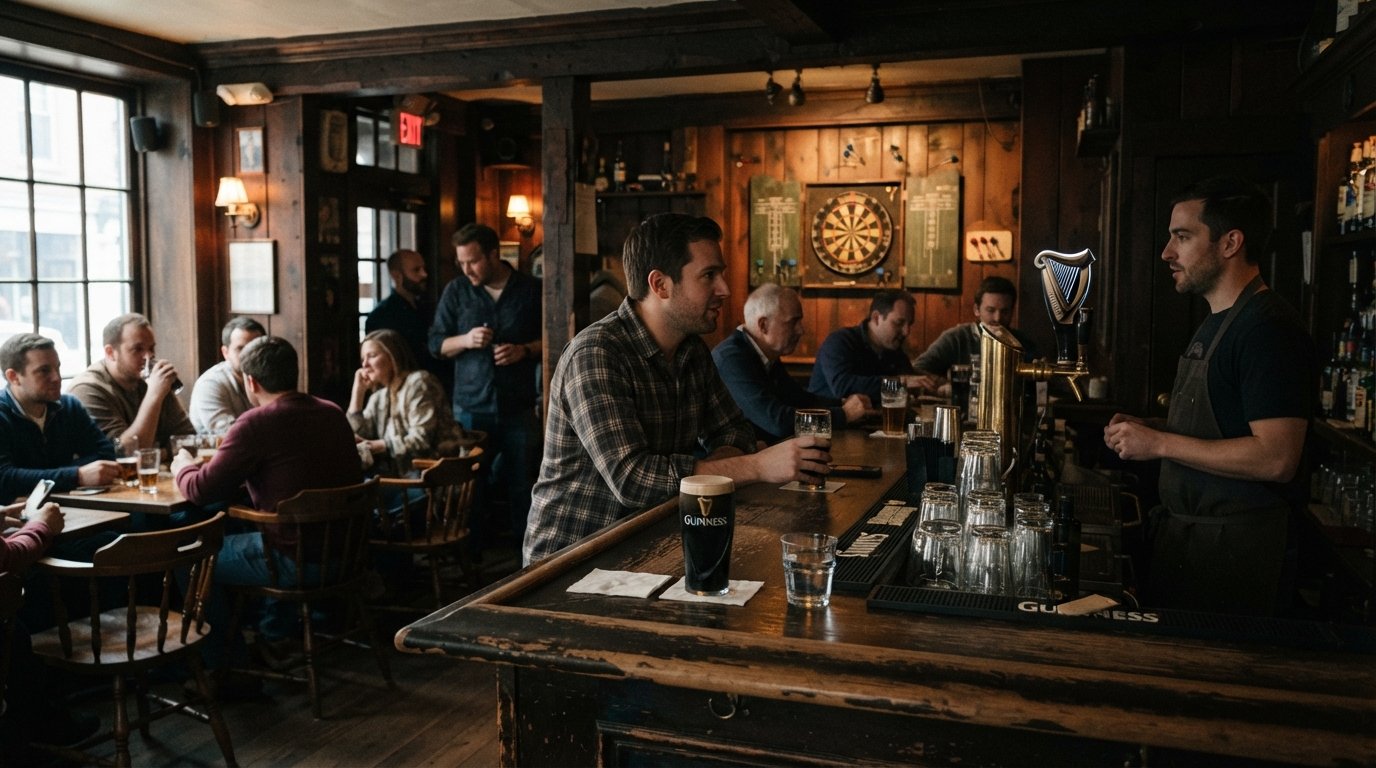
Nightlife on the Hill is not a sprint; it is a pub stool, a firelit corner or a nightcap after dinner. The Sevens Ale House at 77 Charles is the definitive local, a small and cheerful pub that has been going since the 1930s with a handful of taps, a dartboard in the back and absolutely no interest in pretension. It is the kind of place that gives Beacon Hill some welcome grit against all the daintiness. Order a Guinness, find a corner booth and the evening is already doing what it should.
Up near the State House, 21st Amendment at 150 Bowdoin sits in an 1899 building and leans into its political-pub identity with wood-panelled walls, good burgers and a Prohibition-repeal theme that feels perfectly at home a few steps from the dome. Roxanne’s at 6 Beacon brings a looser, cocktail-forward energy, with rum drinks, parmesan fries and a palm-fronds-and-Debbie-Harry mood that keeps things from getting too solemn. Beyond those, most of the after-dark life lives inside the restaurants: bar seats, low-lit dining rooms, the glowing orange bar at Scampo, or the Beacon Hill Hotel bistro when you want one more glass before heading upstairs.
If you want a real night out, Beacon Hill is not trying to compete with the rest of Boston. It is, however, perfectly placed for escaping to one: downtown is a five-minute walk or one Red Line stop away, which means the Hill can stay quiet while the city’s louder impulses happen elsewhere.
Things to do / what to see
Start with the walk itself, because on Beacon Hill the streets are the attraction and the architecture is the argument. Drop down Acorn Street early, before the photographers arrive, then loop past Louisburg Square and continue along Chestnut and Mount Vernon, where the best run of bowfront townhouses and purple antique window glass gives the south slope its particular register. These are not just pretty facades; they are the texture of the place, the reason the Hill feels edited by time rather than merely decorated by it.
Climb back up to the Massachusetts State House for the free weekday tours of Bulfinch’s chambers and the golden dome. Even if you are not the sort to read every plaque, this is one of those buildings that makes the civic imagination visible. It is also the point where Beacon Hill starts to show how neatly it connects to the rest of Boston: Boston Common below, the Freedom Trail threading through, the Public Garden just across Charles Street.
The north slope asks for a different kind of attention. The Black Heritage Trail links about 15 pre-Civil War sites across roughly 1.4 miles, ending at the Museum of African American History and the 1806 African Meeting House, the oldest surviving Black church building in the country. Free ranger-led walks run several days a week in the warmer months, and they are worth making time for, because they reveal the neighbourhood as a place of organising, education and refuge, not only of preservation and wealth.
For a more domestic-scale peek behind the brick, the Nichols House Museum on Mount Vernon opens one preserved Beacon Hill townhouse to the public. The Boston Athenaeum on Beacon Street offers limited public access to one of the country’s oldest independent libraries, and it suits the neighbourhood’s temperament: serious, intimate, and a little guarded. Then there are the green edges that make Beacon Hill feel less enclosed than its narrow streets suggest. Boston Common runs along the south side, the city’s oldest public park, while the Public Garden floats its Swan Boats on the lagoon from mid-April to September in a slow 15-minute loop that has been running since 1877.
Don’t miss in Beacon Hill
Acorn Street, one of the most photographed cobblestone lanes in the country.
The Massachusetts State House with its gleaming golden dome.
Charles Street, lined with antique shops, independent bookstores, and cafes.
The Freedom Trail’s red line cuts right through all of this, which is why Beacon Hill works so well as a launchpad. You can begin the day with the Hill’s brick and gas lamps, then keep walking into the wider colonial city without ever feeling as though you have changed neighbourhoods so much as changed chapters.
Shopping
Charles Street is also the shopping street, though “shopping” here means browsing, comparing and carrying home one carefully chosen thing rather than filling a trunk. The strip’s through-line is antiques. Upstairs Downstairs Home spreads across several curated rooms of antique, vintage and contemporary furniture and decor. Boston Antiques & Lamp Shades is the long-standing specialist for estate jewellery, vintage china, silver and, above all, lamps and shades. Elegant Findings deals in fine antique porcelain, Meissen and European china, crystal and clocks. Together they make Charles Street feel like a series of connected cabinets of curiosity.
Between the dealers you will find independent boutiques, jewellers, home-goods shops and Tibet Emporium, the global-crafts retailer that adds a different texture to the street. This is a genuinely walkable retail strip, with cafés and bistros every few doors when you need to sit down and think about what you are carrying. There is no mall, no big market and no chain-heavy sprawl. That is the point. Beacon Hill shopping is slow and one-off by design, and it suits a neighbourhood where even the sidewalks seem to ask for deliberation. If you want designer names and a brighter commercial pulse, Newbury Street in Back Bay is a 15-minute walk south.
Where to stay in Beacon Hill
Beacon Hill is a small, high-end place to sleep, and the choice is less about category than about mood. The Whitney at 170 Charles is the boutique pick, a 65-room MICHELIN Two-Key hotel at the flat bottom of the Hill with Peregrine downstairs and an easy walk to the Public Garden. The Liberty, a Luxury Collection Hotel at 215 Charles, is the showpiece, the 1851 Charles Street Jail reborn as a 298-room landmark with a soaring cellblock atrium, skyline views and Scampo in the basement. XV Beacon near the State House is the intimate, design-led luxury option, with Mooo attached. The Beacon Hill Hotel at 25 Charles keeps a handful of rooms above its all-day bistro and feels the most residential of the four.
Hotels in Beacon Hill
Our best-rated stays in this neighbourhood. Prices are approximate “from” rates — confirmed at the provider when you continue. We may earn a commission if you book through our partners — at no extra cost to you.
In this area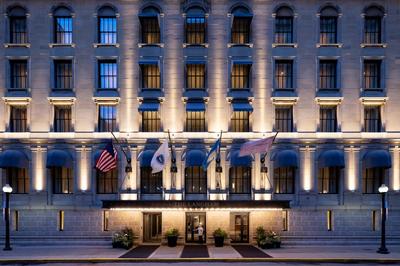 In this area
 In this area
 In this area
 In this area
 In this area
 In this area
Beacon Hill
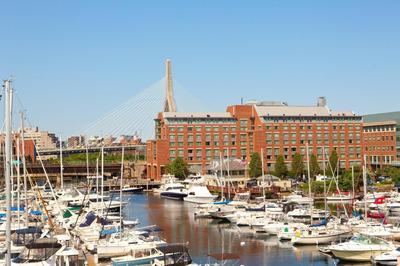
Residence Inn by Marriott Boston Harbor on Tudor Wharf
9.0· 1,369 reviews
approx. from£770 / nightSee prices
 In this area
 In this area
 In this area
 In this area
Beacon Hill
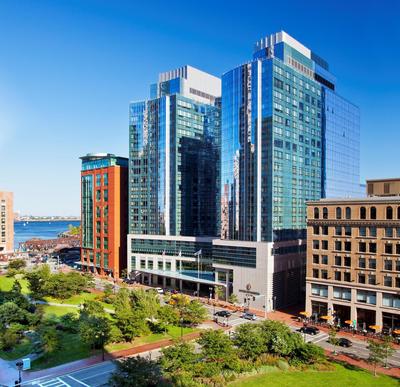
Battery Wharf Hotel, Boston Waterfront
8.2· 2,428 reviews
approx. from£594 / nightSee prices
 In this area
If you are choosing by geography as much as by style, stay lower on Charles Street or nearer the Public Garden for the flattest walking and easiest access to the T. The higher streets are quieter and prettier, but they come with a real climb, especially if you are arriving with luggage. Prices are firmly in premium territory across the board, which is part of the neighbourhood’s reality rather than a surprise to be discovered at check-in.
Getting around
Beacon Hill is one of the most walkable pockets in the country, but it is walkable in the workout sense. The streets are steep, the brick and cobble are uneven, and the practical advice is simple: wear proper shoes and leave the heels at home. Charles/MGH on the Red Line sits at the flat foot of Charles Street, closest to the Public Garden end and the antique strip. Park Street, where the Red and Green lines cross, sits by Boston Common and puts you five minutes from the State House. Bowdoin and Government Center cover the north-east edge. Most addresses are within a three- to ten-minute walk of one of them.
From here it is one or two stops to downtown, Back Bay, the North End and the Seaport, and the ride to Logan Airport runs about 15 to 20 minutes on the Blue Line via a transfer, or a short taxi through the tunnel. Driving is the weak point. Streets are narrow and one-way, parking is resident-permit only and painfully scarce, so the sensible move is to leave the car at the hotel garage and walk or take the T. Bluebikes docks around the neighbourhood cover the short hops that the hills make tiring.
Beacon Hill rewards the person who moves at its pace. Not rushed, not performative, just observant enough to notice the sway of a Green Line car beyond the Common, the uneven brick underfoot, the way dusk settles into the windows on Charles Street. It is a neighbourhood that looks composed from a distance and lived-in up close, and that is exactly why it keeps drawing people back for another circuit, another meal, another late walk under the lamps.
Gallery
Beacon Hill in pictures
Beacon Hill — your questions
Is Beacon Hill a good area to stay in Boston?
Yes, especially if you care more about walkability, architecture and a central base than nightlife. You are close to Boston Common, the Public Garden and the Freedom Trail, with the Red Line at the foot of the Hill. The trade-offs are the steep streets, uneven brick and higher prices for both hotels and dining.
Is Beacon Hill safe?
Very. It is one of Boston’s quietest and most affluent residential neighbourhoods, calm and well-lit day and night. Standard big-city awareness is enough; the bigger challenge is usually the cobblestones and hills rather than safety.
What is the best time to photograph Acorn Street?
Go early in the morning, ideally right after sunrise, or return at dusk when the gas lamps come on. By mid-morning the alley often has a queue of photographers, and weekdays are quieter than weekends. Spring is especially good when the window boxes are in bloom.
What is Beacon Hill best for?
History, architecture, romantic walks, antique shopping and a quiet, central place to stay. It is especially good for first-time visitors who want Boston Common, the Public Garden and the Freedom Trail right outside the door.